A Living Example – 2 Thessalonians 3:7-9

setting-the-example“For you yourselves know how you ought to follow our example, because we did not act in an undisciplined manner among you, nor did we eat anyone’s bread without paying for it, but with labor and hardship we kept working night and day so that we would not be a burden to any of you; not because we do not have the right to this, but in order to offer ourselves as a model for you, so that you would follow our example” (2 Thessalonians 3:7-9, NASB).

What greater way to teach than to model or be an example of the lesson you are teaching! But, when you set yourself up an example, it requires an extremely high level of accountability and responsibility.

Continue reading

Word! – 1 Thessalonians 2:13

God's_Word“For this reason we also constantly thank God that when you received the word of God which you heard from us, you accepted it not as the word of men, but for what it really is, the word of God, which also performs its work in you who believe” (1 Thessalonians 2:13, NASB).

The Apostle Paul praised the Thessalonians for accepting his preaching as if it was words spoken by God. The words he spoke to them weren’t just impotent words spoken by human beings but the very Word of God.

Continue reading

Wait Training, Part 1: Strengthening Your Faith – Isaiah 40:31

wait-trainingBut they that wait upon the Lord shall renew their strength; they shall mount up with wings as eagles; they shall run, and not be weary; and they shall walk, and not faint” (Isaiah 40:31, KJV).

When I was younger, we often sang this verse at prayer meetings or Bible studies as a song. Then, at the end of the verse we added this refrain to the song: “Teach me Lord, teach me Lord, to wait.”

The Hebrew word that is translated “they that wait upon” in the KJV finds its root in another Hebrew word that means to wait or look for, to hope for or expect. The sense of the waiting in this verse is eager expectation or anticipation. So, the NIV translates it as “those who hope” and the HCSB translates it as “those who trust.”

Unfortunately, when we talk about “waiting upon the Lord,” it’s not necessarily waiting with hopeful anticipation, but more like waiting with dreaded apprehension! For us, waiting upon the Lord is exceedingly distressful and practically unbearable. Instead of eagerly waiting upon the Lord, we impatiently wait upon the Lord.

Continue reading

Tolerance – Isaiah 5:20

tolerance“Woe to those who call evil good, and good evil; who substitute darkness for light and light for darkness, who substitute bitter for sweet and sweet for bitter!” (Isaiah 5:20, NASB).

There are those in this world who are trying to tell us what we know is evil is good and what we know is good is evil. Sometimes, they do it openly, but more often than not they do it inconspicuously. And, they tell us it’s for our own good. They say it will make the world a better place.

And, before you know it, we develop a tolerance for evil. Sometimes, this tolerance for evil comes in the form of compromise. And, sometimes, this tolerance for evil comes in the name of “tolerance” itself! And then, those who won’t compromise or don’t demonstrate an acceptable level of tolerance are called “intolerant” or “bigot.”

Continue reading

Entitled! – Luke 20:9-19

entitlement_seagullsWhat, then, will the owner of the vineyard do to them? He will come and destroy these vine-growers and will give the vineyard to others” (Luke 20:15-16, NASB).

Jesus told a parable of a man who planted a vineyard and then leased it to tenants to work it for him. After a while the owner of the vineyard sent servants to the tenants to collect a portion of the fruit in payment on the lease, but the tenants beat the servants and sent them away without payment. Finally, the owner sent his son thinking the tenants would respect him. Instead, they killed him because he was the heir and they wanted to inherit the vineyard for themselves.

In these verses Jesus asked those listening how the owner should resolve his problem and then answered His own question: he would destroy the tenants and give the vineyard to others!  The meaning of the parable was obvious to those who heard it–the owner of the vineyard was God and the tenants were the priests and scribes, the spiritual leaders of the Jews (vs. 19).

But, the meaning of the parable should not be lost on those of us today who are stewards of God’s grace–individually or collectively. When we get so focused on our own good works and neglect the One  we are working for, we can develop a false sense of entitlement like the wicked tenants who claimed ownership of the vineyard and all they produced from it.

Continue reading

Reckless Indifference – Luke 19:11-27

whateverI tell you that to everyone who has, more shall be given, but from the one who does not have, even what he does have shall be taken away (Luke 19:26, NASB).

Jesus told a parable about a prince who went to a far country to receive a kingdom. Before the prince departed he gave a significant sum of money to several servants and ordered them to engage in business with the money until he returns.

Upon his return he ordered each servant to give an accounting of his business activities. One servant profited ten times more with the money and he was given authority over ten cities in the prince’s new kingdom; another profited five times more with the money and was given authority over five cities. The third said he held the money without investing it because he was afraid of the prince’s fury if he did not make a profit.

So, the prince condemned the complacent servant and took the money he had given him and gave it to the one who had earned ten times more.

Continue reading

American Idolatry – Isaiah 2

materialism“Their land has also been filled with idols; they worship the work of their hands, that which their fingers have made… The proud look of man will be abased and the loftiness of man will be humbled, and the Lord alone will be exalted in that day” (Isaiah 2:8,11, NASB).

We tend to think that idolatry is an Old Testament phenomenon. Long ago, unenlightened people made little figurines from wood or stone or they built altars in the woods or on mountaintops. To us, that’s idolatry.

We think we’re more sophisticated today, so idolatry isn’t a big problem like it was in the Old Testament. But, it’s not that idolatry isn’t as prevalent today as in the Old Testament. It’s just that our idolatry manifests itself differently. It’s more subtle…and deceptive!

Continue reading

Be Strong and Courageous – Joshua 1:1-9

strong_and_courageous“Be strong and courageous! Do not tremble or be dismayed, for the Lord your God is with you wherever you go!” (Joshua 1:9, NASB).

After Moses died, God commissioned Joshua to take leadership and military command over Israel and lead Israel into the promised land. But there were many evil and unfriendly people inhabiting the land that God promised to Israel. So, God assured Joshua of success in conquering the land for Israel because He would be with Joshua wherever he went.

It’s almost like God was giving Joshua a pep talk before the battle started because three times in this passage God tells Joshua to “be strong and courageous” (vs. 6, 7, 9). And then God’s admonition to Joshua is repeated by the officers of Israel’s army to reinforce God’s command (vs. 18).

Continue reading

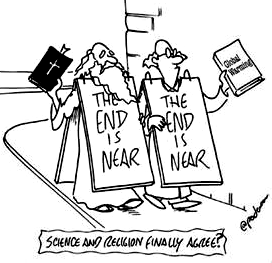
The End is Near – Luke 17:20-37

End_is_near“And just as it happened in the days of Noah, so it will be also in the days of the Son of Man: they were eating, they were drinking, they were marrying, they were being given in marriage, until the day that Noah entered the ark, and the flood came and destroyed them all. It was the same as happened in the days of Lot: they were eating, they were drinking, they were buying, they were selling, they were planting, they were building; but on the day that Lot went out from Sodom it rained fire and brimstone from heaven and destroyed them all. It will be just the same on the day that the Son of Man is revealed” (Luke 17:26-30, NASB).

Jesus was once asked by the Pharisees when the Kingdom of God would come. Jesus replied that the Kingdom of God was imminent–it was so near to them that it was within their grasp because the coming of Jesus was the coming of the Kingdom of God.

Jesus then explained to His disciples that a day will come when this present, invisible Kingdom which He was inaugurating on Earth culminates with a future, visible Kingdom at His Second Coming at the end of the age. The Kingdom’s future coming will render judgment on Earth and will receive redeemed people into eternal life.

Continue reading

The Spirit-Filled Life – Joel 2:28-29

holy-spirit-filled“And it shall come to pass afterward, that I will pour out my Spirit on all flesh; your sons and your daughters shall prophesy, your old men shall dream dreams, and your young men shall see visions. Even on the male and female servants in those days I will pour out my Spirit.” (Joel 2:28-29, ESV).

On the day of Pentecost when the disciples were filled with the Holy Spirit and began to speak in other tongues, Peter stood up and declared to all the Jews in Jerusalem who witnessed the event that this Spirit-filling was the fulfillment of Joel’s prophecy (see Acts 2:16-21). So, the day of Pentecost was the beginning of the era that Joel was talking about–the last days–in which God pours out His Spirit on all His people.

Continue reading