The Nicodemus Dilemma – John 3:1-21

“How can these things be?” asked Nicodemus (John 3:9, CSB).

During the twilight discussion between Jesus and Nicodemus, an iconic declaration is spoken by Jesus that is often included in tracts, sermons and Sunday School lessons: John 3:3: “Unless someone is born again he cannot see the kingdom of God.”

But little is discussed of Nicodemus’ side of the conversation and what he said to prompt Jesus to make this momentous pronouncement.

John indicates that Jesus went to Jerusalem for the Passover Festival at the beginning of his ministry. During the Passover Festival Jesus drove the money changers from the Temple and performed many miracles. As a result of the miracles many people in Jerusalem believed that Jesus was the Messiah (see John 2:13-25).

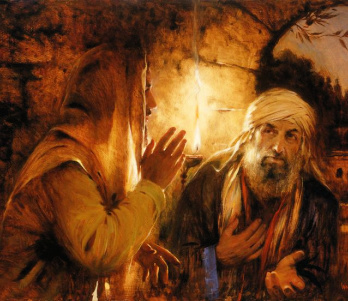
Probably during this Passover Festival in Jerusalem Nicodemus held his meeting with Jesus. Nicodemus was a Pharisee and ruler of the Jews and came to Jesus at night. Maybe Nicodemus was trying to avoid public scrutiny because of his religious and political position or he wanted to have a one-on-one conversation with Jesus when there weren’t crowds surrounding Jesus.

Having witnessed Jesus’ ministry in Jerusalem, Nicodemus apparently felt a disconnect between his religious understanding and what he observed in the ministry of Jesus at Jerusalem. Nicodemus’ dilemma is apparent in the questions he asked Jesus during their discussion.

To begin the conversation, it appears that Nicodemus wanted verification of Jesus’ calling. So, Nicodemus injected an offhanded question about His authenticity into a polite acknowledgement of His ministry. First, Nicodemus said, “Rabbi, we know that you are a teacher who has come from God, for no one could perform these signs you do unless God were with him.” (vs. 2).

Nicodemus’ probably expected Jesus to affirm that He was, indeed, sent from God. But Jesus skipped over the small talk and took aim at the question that was really bothering Nicodemus–how to enter the kingdom of God. Today we might ask, “How do I get saved?”

Jesus turned the conversation into a theological challenge to Nicodemus’ rather than a debate over His divinity. Jesus did this by making the outrageous pronouncement, “Unless someone is born again (or born from above), he cannot see the kingdom of God.”

When confronted with this incredible and even bizarre declaration of Jesus, a bewildered Nicodemus responded to Jesus with as ridiculous an assertion as he thought Jesus was making to him: “How can anyone be born when he is old?” …. “Can he enter his mother’s womb a second time and be born?” (vs. 4).

Nicodemus’ reaction was certainly one I can relate to as a fellow inhabitant of this world when confronted with the other-wordly declarations and supernatural actions of Jesus!

Fortunately, Jesus explained to Nicodemus exactly what He meant by being born again. “Jesus answered, “Truly I tell you, unless someone is born of water and the Spirit, he cannot enter the kingdom of God” ( vs. 5).

Unfortunately, His explanation ran contrary to Nicodemus’ existing religious perceptions. Nicodemus then articulated his dilemma and the dilemma of many of us who think we’ve got God all figured out and neatly stored away in our religious beliefs box.

“How can these things be?” (vs. 9).

We have all experienced the Nicodemus dilemma because it’s the human dilemma. When confronted with the reality of God’s Kingdom, it challenges the reality I experience in this world.

Jesus’ teachings (and His life, death and resurrection) subvert our closely-held and common beliefs about what it takes to obtain eternal life. Like Nicodemus, I might think that if I’m a good person, if I follow the rules, or if I do more good than bad in my life then God will accept me in because I’m one of the good (religious) guys.

But, that’s not what Jesus said–at all! Jesus said that entering the Kingdom of God is supernaturally-enabled!

Jesus stipulated that human beings must have a spiritual re-birth to make it into heaven. If you are a human being, you have been born once (of water). But, to enter the Kingdom of God you must be born a second time by/of the Spirit of God.

Being born again means entering into an eternal relationship with God through Jesus Christ and enabled by the Holy Spirit.

It’s just that simple….and profound!

For God loved the world in this way: He gave his one and only Son, so that everyone who believes in him will not perish but have eternal life. (John 3:16, CSB)

Modern Idols – Deuteronomy 5

Do not have other gods besides me. Do not make an idol for yourself in the shape of anything in the heavens above or on the earth below or in the waters under the earth. Do not bow in worship to them, and do not serve them, because I, the Lord your God, am a jealous God, bringing the consequences of the fathers’ iniquity on the children to the third and fourth generations of those who hate me, but showing faithful love to a thousand generations of those who love me and keep my commands (Deuteronomy 5:7-10, CSB; the first and second commandments of the Ten Commandments).

The first two commandments of the Ten Commandments address the worship of God. The first commands us to worship only the one true God and the second commands us to worship God in the correct way (or avoid idolatry).

The word “worship” is related to the idea of ascribing worth to something. We worship what we think is worthy or important.

What you think is important is a priority in your life. It’s what you idolize. And, it’s what you worship.

The litmus test of a priority is what you spend your time and money on. And, what you spend your time and money on is likely what you talk and think about. So, the things that are really important to you are those things you spend your time and money doing and talking and thinking about.

Continue reading

A Little Jesus – Matthew 16:24-28

Then Jesus said to his disciples, “If anyone wants to follow after me, let him deny himself, take up his cross, and follow me. For whoever wants to save his life will lose it, but whoever loses his life because of me will find it. For what will it benefit someone if he gains the whole world yet loses his life? Or what will anyone give in exchange for his life? (Matthew 16:24-26, CSB).

A friend gave my wife a little figurine of Jesus and told her that “everyone needs a little Jesus.” I have started to notice these little Jesus figurines in lots of places. Recently, I pulled into the gas station to fill up the car with gas and there were little Jesus figurines holding “God Bless You” banners on all the gas pumps!

Although I am not keen on images or pictures of Jesus, I can certainly appreciate the play on words and the sentiment, “Everybody needs a little Jesus!”

But, the Bible and Jesus Himself explained that the amount of Jesus everybody needs is a whole lot more than just a little! In these verses from Matthew 16, the scenario Jesus described to His disciples was one of a condemned person carrying a cross on the way to execution. This imagery was certainly recognizable to His disciples as a form of capital punishment in the Roman Empire.

Continue reading

The Easy Way or The Hard Way – Revelation 7

Then one of the elders asked me, “Who are these people in white robes, and where did they come from?” I said to him, “Sir, you know.” Then he told me: These are the ones coming out of the great tribulation. They washed their robes and made them white in the blood of the Lamb…. The one seated on the throne will shelter them: They will no longer hunger; they will no longer thirst; the sun will no longer strike them, nor will any scorching heat. For the Lamb who is at the center of the throne will shepherd them; he will guide them to springs of the waters of life, and God will wipe away every tear from their eyes (Revelation 7:13-17, CSB).

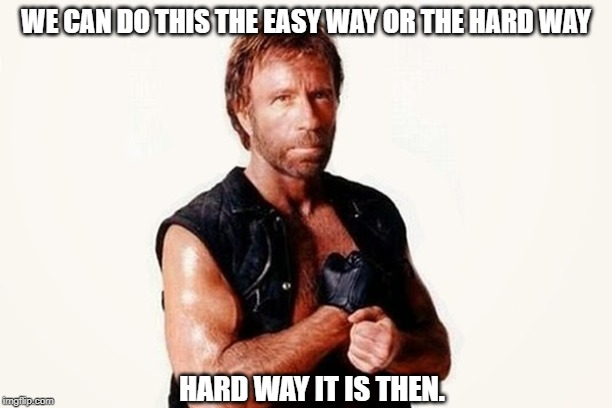
Have you ever told somebody or been told by somebody, “There’s an easy way or there’s a hard way.”

Usually we’re saying that to somebody who is over-complicating a task or just being stubborn because they want to do things their own way even if there’s an easier or better way to do it.

The Book of Revelation describes a group of people who have chosen to enter God’s Kingdom THE HARD WAY!

Continue reading

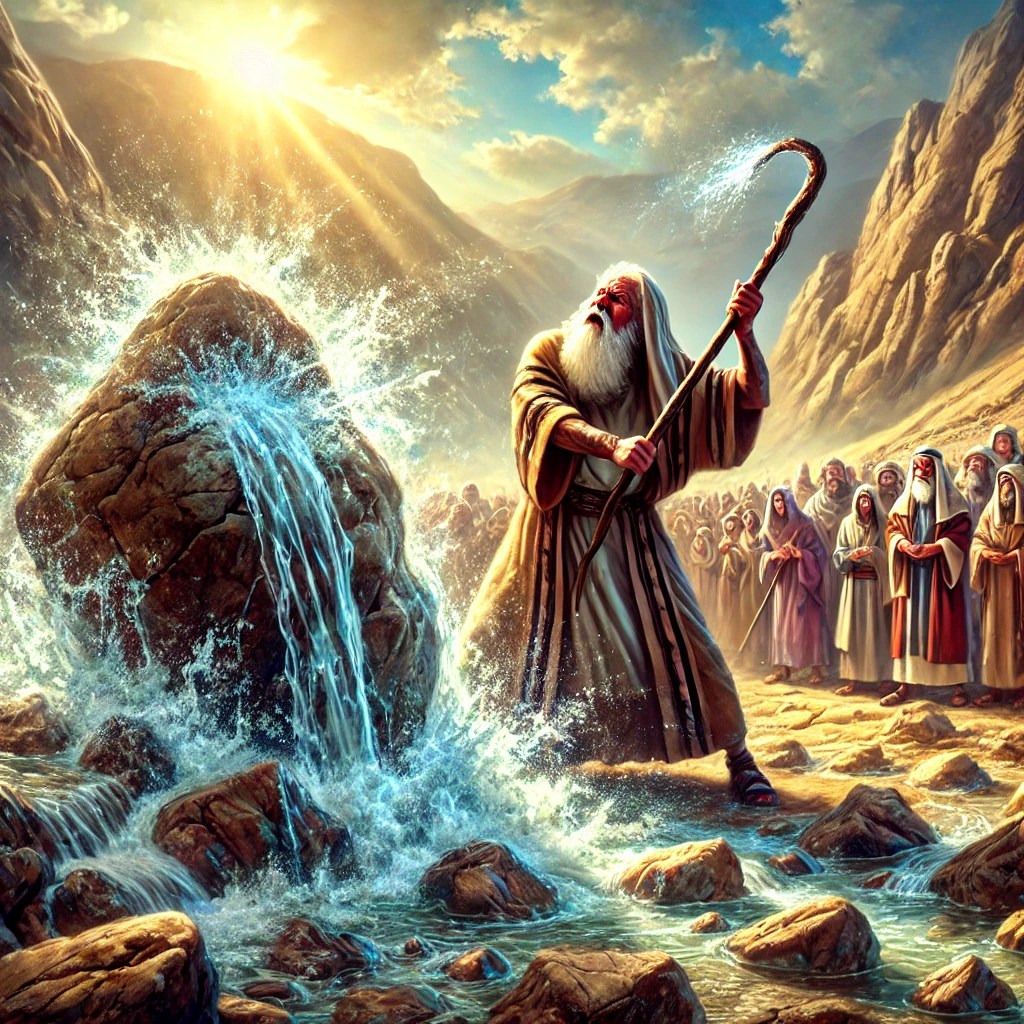
Sacred Rod- Numbers 20:1-13

But the Lord said to Moses and Aaron, “Because you did not trust me to demonstrate my holiness in the sight of the Israelites, you will not bring this assembly into the land I have given them.” These are the Waters of Meribah, where the Israelites quarreled with the Lord, and he demonstrated his holiness to them (Numbers 20:12-13 CSB).

In Numbers 20 the Israelites were nearing the end of their 40-year wilderness wandering. They encamped near the southern border of the land of Canaan at Kadesh, the same place they encamped when they sent the spies in to reconnoiter the Promised Land 40 years earlier.

Due to the scarcity of water, the Israelites assembled against Moses and protested their return to Kadesh: “Why have you led us up from Egypt to bring us to this evil place?” (vs. 5).

Faced with escalating tensions over the water shortage, Moses and Aaron hurried away from the agitated crowd and took refuge in the tent of meeting (tabernacle). Inside the tabernacle they fell face down to intercede before the Lord on behalf of the people.

In response to Moses’ and Aaron’s intercession, the glory of God appeared to them. God told them to take the staff from the tent of meeting, assemble the people at the rock (probably rock face of the side of a hill or mountain). Then, speak to the rock while the people watch and the rock will yield its water (vs. 7-8).

Continue reading

Jesus: Emotional Supporter or Revolutionary Ringleader – John 14:1-16

Thomas said to him, ‘Lord, we don’t know where you are going, so how can we know the way?’ Jesus answered, ‘I am the way and the truth and the life'” (John 14:5-6, NIV).

Recently, I was standing in the Sunday morning contemporary church service singing the lyrics of a worship song. As we sang the words of the chorus a few too many times it caused me to wonder if these lyrics were even biblical.

Did Jesus come to hold my hand and help me through all my problems? Did he come to make me feel better about myself?

Sometimes our worship songs and even our preaching romanticizes the unconditional love of God so that Jesus is portrayed as our best friend who is always ready to support our emotional needs whenever we’re confronted with problems.

But, if we want to put God’s love in some sort of context, I think God’s love is more like the unconditional love of a good parent than the affection of a best friend.

Continue reading

The Next Big Thing

My goal is to know him and the power of his resurrection and the fellowship of his sufferings, being conformed to his death, assuming that I will somehow reach the resurrection from among the dead. Not that I have already reached the goal or am already perfect, but I make every effort to take hold of it because I also have been taken hold of by Christ Jesus. Brothers and sisters, I do not consider myself to have taken hold of it. But one thing I do: Forgetting what is behind and reaching forward to what is ahead, I pursue as my goal the prize promised by God’s heavenly call in Christ Jesus” (Philippians 3:10-14, CSB).

Successful business people are successful because they are forward-thinking. They don’t linger or loiter in current achievements no matter how great those achievements may be. Their current success doesn’t bind them to the status quo.

They are always looking ahead. They are always striving for the next big thing!

Because there is always a new project, an unreached goal out there to attain. There is always a next new accomplishment.

Continue reading

Emancipation Proclamation – Hebrews 13:1-8

First published December 2, 2014 and edited for re-publication here.
Emancipation_Proclamation

“Remember those who led you, who spoke the word of God to you and considering the result of their conduct, imitate their faith. Jesus Christ is the same yesterday, today and forever” (Hebrews 13:7-8, NASB).

Recently in the men’s Sunday School class I attend, the lesson was from Hebrews 13. And, this lesson from Hebrews 13 helped me resolve a theological dilemma I had wrestled with from Romans 6-8.

But, I love it when that happens! It reinforces the consistency of the Bible to me and why I should read and study all of it over and over again. And, of course, why it is so important for the Holy Spirit to enlighten us and counsel us when we study God’s word.

Let me explain…

Continue reading

Crybaby Christians – Hebrews 12:1-13

“Therefore, strengthen your tired hands and weakened knees, and make straight paths for your feet, so that what is lame may not be dislocated but healed instead” (Hebrews 12:12-13, CSB).

In the first half of Hebrews 12, the Hebrews writer expounds on a saying from Proverbs in the Old Testament: “For the Lord disciplines the one he loves and punishes every son he receives” (Hebrews 12:6, Proverbs 3:12).

First, the Hebrews writer reminds the Hebrew Christians that any suffering they are experiencing is not nearly as much as what Jesus, the Son of God, endured to the extent of shedding His blood from flogging and crucifixion.

Next, the Hebrews writer explains that when you do suffer, consider it the discipline of the Lord. Because the Lord disciplines His children with the same intent as a human father disciplines his children.

So, Christian suffering is the Lord’s discipline exacted upon His children in love to learn His righteousness.

Continue reading

Cosmic Convergence- Hebrews 12:18-24

“Instead, you have come to Mount Zion, to the city of the living God (the heavenly Jerusalem), to myriads of angels, a festive gathering, to the assembly of the firstborn whose names have been written in heaven, to a Judge, who is God of all, to the spirits of righteous people made perfect, and to Jesus, the mediator of a new covenant, and to the sprinkled blood, which says better things than the blood of Abel.”

The Hebrews writer develops a final, astounding contrast between the Old Testament law and sacrificial system and the gospel of Christ. While the messages of the two are inter-dependent (see Hebrews 11:40), certainly the greatness of the new covenant symbolized by Mt. Zion where God resides greatly exceeds and even overshadows the old covenant revelation at Mount Sinai.

The Hebrews writer declared that under the new covenant it’s like getting a glimpse of heaven! With the new covenant believers encounter God. Mediated by the blood of Jesus and the indwelling Holy Spirit, Christians on the Earth share in worship with innumerable angels and the great assembly of those who have come before and died in faith and are already in God’s presence.

Continue reading