Inevitable – Daniel 5

“And you his son, Belshazzar, have not humbled your heart, though you knew all this, but you have lifted up yourself against the Lord of heaven” (Daniel 5:22-23, ESV).

You have certainly heard and probably used the expression, “the writing is on the wall” or “the handwriting is on the wall.” The phrase is often used whenever an inevitable result or imminent danger has become apparent. In Daniel 5, what should have been apparent and inevitable to King Belshazzar of Babylon seemed to allude him.

Belshazzar’s feast in Daniel 5 took place years, possibly decades, after the events of King Nebuchadnezzar in Daniel 4 and under the kingship of a different king of Babylon. King Belshazzar was once thought to be a fictional king because ancient records named Nabonidus as Babylon’s last king. Later cuneiform discoveries showed that Belshazzar was Nabonidus’s son and served as co-regent while Nabonidus was away from Babylon.

Belshazzar also could have been Nebuchadnezzar II’s grandson through his mother though this is not certain. Daniel’s ascribing him as Nebuchadnezzar’s “son” in vs. 22 is consistent with ancient usage where the term often means descendant or royal successor.

In this chapter King Belshazzar held a great feast for a thousand of his lords and drank wine in front of all those gathered for the feast. Belshazzar commanded that the vessels of gold and of silver that King Nebuchadnezzar had taken from the temple in Jerusalem be brought in so that he and his lords, his wives, and his concubines could drink from them (vs. 1-3). Basically, they were indulging in a drunken revelry and debasing sacred Jewish temple vessels by using them as wine goblets.

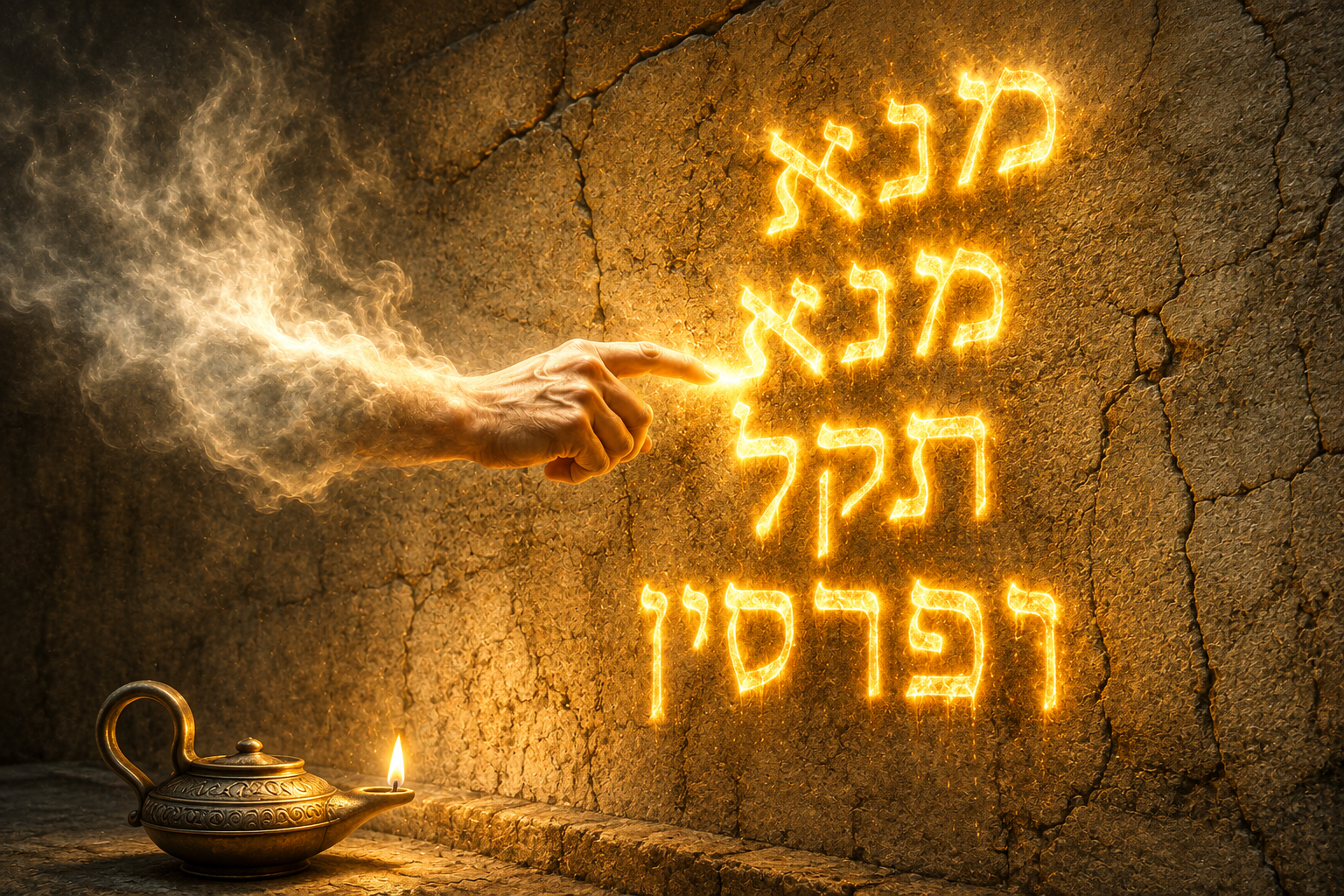
Suddenly, a disembodied hand began to write words on the palace wall during the feast. The king saw the hand as it wrote and became quite alarmed and called for the wise men of Babylon to interpret the writing. The wise men were perplexed and couldn’t interpret the handwriting. The queen then urged Belshazzar to have Daniel brought in to interpret the handwriting on the wall.

We don’t know what words were written on the wall until Daniel gave his interpretation. But, before interpreting the words Daniel reminded King Belshazzar about the events we read about in Daniel 4. King Nebuchadnezzar was humbled by God until he recognized that the Most High God rules the kingdoms of mankind and designates who rules over them according to His will.

The words written on the palace wall were “Mene, Mene, Tekel, and Parsin.” The words were of Aramaic origin. Literally, the expression meant two minas, a shekel and two parts or alternatively numbered, weighed, divided. Daniel’s interpretation was based on an elaborate wordplay, relying on the fact that each word can denote a different coin and the third word can be interpreted as Persia.

Daniel’s interpretation was a divine verdict against King Belshazzar:

  • Mene – God has numbered your kingdom.
  • Tekel – You have been weighed and found wanting.
  • Peres – Your kingdom is divided and given to the Medes and Persians.

King Belshazzar’s offense resulted in the loss of his life and his kingdom (see vs. 30-31). But, his offense was not merely a drunken act of disrespect and sacrilege….

Belshazzar’s offense was that he challenged the authority of God. “But you have lifted up yourself against the Lord of heaven. And the vessels of his house have been brought in before you, and you and your lords, your wives, and your concubines have drunk wine from them. And you have praised the gods of silver and gold, of bronze, iron, wood, and stone, which do not see or hear or know, but the God in whose hand is your breath, and whose are all your ways, you have not honored” (vs. 23).

And, Belshazzar could not plead ignorance to this offense (see vs. 22). It was a deliberate act of spiritual rebellion!

While immoral behavior is certainly offensive to God, it can often be a sign of a much greater offense that is even more concerning to God–that is, spiritual rebellion.

Belshazzar’s downfall was inevitable because he knowingly exalted himself against the God of Israel despite the witness of Nebuchadnezzar’s experience. The handwriting on the wall was not merely a prediction of Babylon’s fall but a declaration that the Most High God alone determines the rise and fall of the kingdoms of this world.

And, as we shall see as we study Daniel that this is a theme that culminates in Daniel’s later visions of God’s ultimate kingdom overcoming every human and spiritual empire.

Therefore we must pay much closer attention to what we have heard, lest we drift away from it. For since the message declared by angels proved to be reliable, and every transgression or disobedience received a just retribution, how shall we escape if we neglect such a great salvation? (Hebrews 2:1-3, ESV)

Kiss the Son – Psalm 2

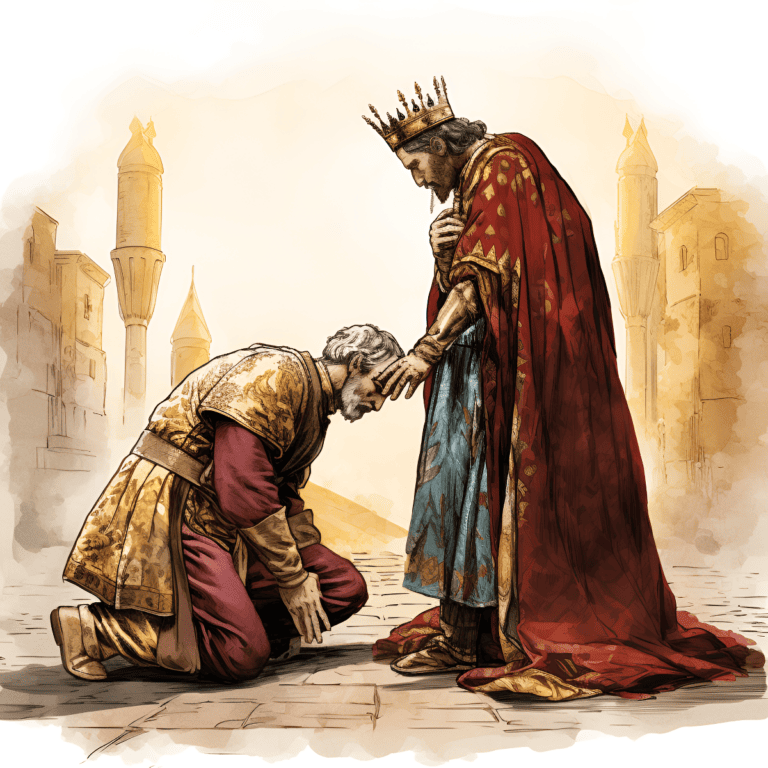
Now therefore, O kings, be wise;
    be warned, O rulers of the earth.
Serve the Lord with fear,
    and rejoice with trembling.
Kiss the Son, lest he be angry,
    and you perish in the way,
    for his wrath is quickly kindled.
Blessed are all who take refuge in him.
(Psalm 2:10-12, ESV)

In the Second Temple period (about 516 BC–70 AD) and early Jewish literature, this Psalm was usually read about Israel’s king (a historical Davidic ruler) or about a future Messiah from David’s line. It was possibly a royal Psalm used at the coronation of a king of Judah.

There’s no doubt that it had a messianic message: “The Lord said to me, “You are my Son; today I have begotten you. Ask of me, and I will make the nations your heritage, and the ends of the earth your possession. You shall break them with a rod of iron and dash them in pieces like a potter’s vessel” (vs. 7-9).

Luke in Acts 13:33 and the Hebrew writer in Hebrews 1:5 and 5:5 quoted from vs. 7 about the Divine Sonship of Jesus. John in his Revelation refers to the messianic conquering king in Revelation 2:27, 12:5 and 19:15 using the imagery of vs. 8-9.

While Psalm 2 presents a warning or notification to the kings and rulers of the ancient world, let’s look at it from another point of view. There is a sense in which this Psalm applies to all people–to you and me.

Continue reading

Sacred Rod- Numbers 20:1-13

But the Lord said to Moses and Aaron, “Because you did not trust me to demonstrate my holiness in the sight of the Israelites, you will not bring this assembly into the land I have given them.” These are the Waters of Meribah, where the Israelites quarreled with the Lord, and he demonstrated his holiness to them (Numbers 20:12-13 CSB).

In Numbers 20 the Israelites were nearing the end of their 40-year wilderness wandering. They encamped near the southern border of the land of Canaan at Kadesh, the same place they encamped when they sent the spies in to reconnoiter the Promised Land 40 years earlier.

Due to the scarcity of water, the Israelites assembled against Moses and protested their return to Kadesh: “Why have you led us up from Egypt to bring us to this evil place?” (vs. 5).

Faced with escalating tensions over the water shortage, Moses and Aaron hurried away from the agitated crowd and took refuge in the tent of meeting (tabernacle). Inside the tabernacle they fell face down to intercede before the Lord on behalf of the people.

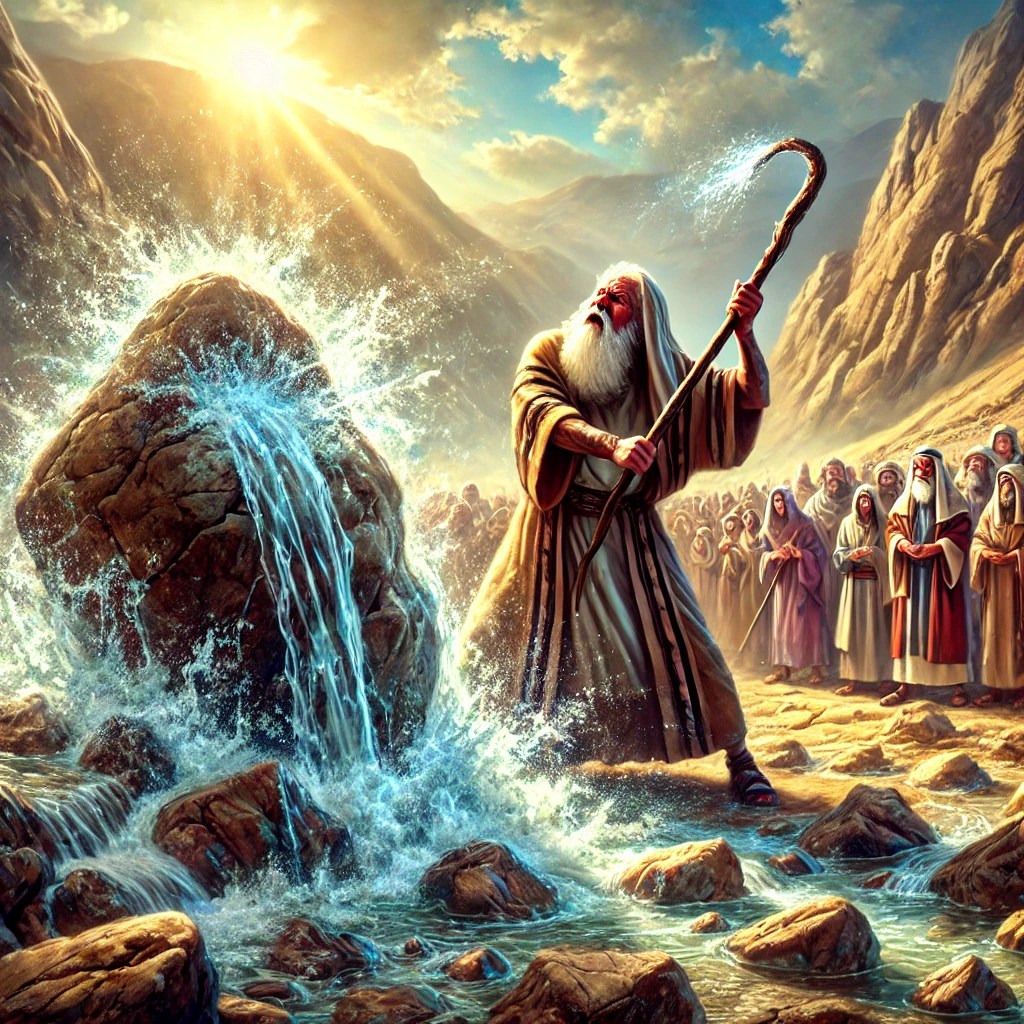
In response to Moses’ and Aaron’s intercession, the glory of God appeared to them. God told them to take the staff from the tent of meeting, assemble the people at the rock (probably rock face of the side of a hill or mountain). Then, speak to the rock while the people watch and the rock will yield its water (vs. 7-8).

Continue reading

Between the Dead and the Living – Numbers 16:47-48

censerofAaron“But Aaron burned the incense and purified the people. He stood between the dead and the living, and the plague stopped.” (Numbers 16:47-48, NLT)

Numbers 16 is the record of yet another rebellion by the Israelites against Moses’ leadership and God’s authority.

This rebellion seemed to be a power struggle that was a more egregious challenge to God’s authority than any of the previous rebellions. This rebellion was led by certain Levites who had some of the most important duties related to the upkeep of the Tabernacle.

Continue reading