
Daniel 10 introduces the book’s fourth and final vision, which includes Chapters 10, 11, and 12. It is set in about 537 BC, the third year of Cyrus and approximately two years after the vision of Chapter 9. Daniel’s Babylonian name, Beltshazzar, is used to remind us he is still in Babylonian exile.
Two years earlier the first group of Jewish exiles had returned to Jerusalem in response to Cyrus’s decree to rebuild the Jerusalem Temple (see Ezra 1-2). But we know from Daniel 9 that although some of the captives were returning, the end of the Babylonian exhile was not the end of conflict for the Jewish people.
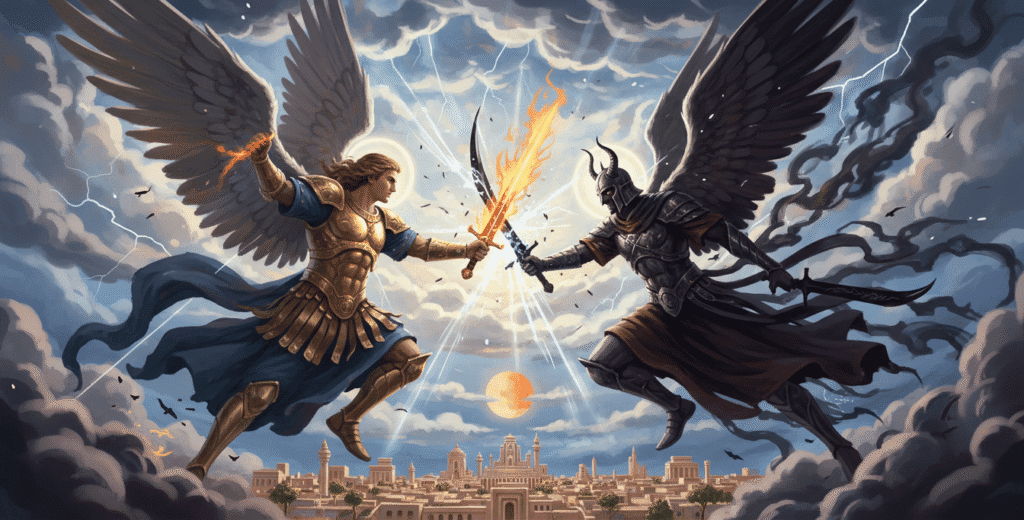
Daniel 10 momentarily pulls back the curtain separating the visible and invisible realms–the earthly and heavenly, the temporal and eternal–to reveal the divine realities behind human conflicts. This prologue to Daniel’s vision in Chapters 10-12 explained that the historical struggles of the Jews, Persia, and Greece (and all nations by extension) have a supernatural dimension.
Daniel 10:4-7 described a glorious being wearing linen, with eyes like flaming torches and a face like lightning that appeared to him in a vision. Possibly that figure was a manifestation of God Almighty (a theophany). If so, then the figure introduced in verses 5–6 need not be the same being as the messenger who later described needing Michael’s assistance to get his message through to Daniel. But, it seems improbable that God Himself could be held up in the spiritual realm for 21 days and would need assistance from another spiritual being (vs. 13).
While other supernatural beings appeared to Daniel later in the vision (vs. 12:5), the glorious figure described in vs. 10:5-6 was a heavenly attendant of God who reflected God’s glory and thereby demonstrated his credentials to bring the message. Without reading more into the story, he was also the one talking to Daniel in the vision.
The divine figure or angel told Daniel that the prince of Persia resisted him for 21 days until one of the chief princes, the archangel Michael, came to assist him. Some may argue that the “prince” mentioned here was a human ruler, but certainly it was a supernatural being who exercised authority over the Persian nation: “When the Most High gave to the nations their inheritance, when he divided mankind, he fixed the borders of the peoples according to the number of the sons of God” (Deuteronomy 32:8, ESV).
The 21-day delay (Daniel had spent three weeks in prayer and mourning – vs. 2-3) was because of the resistance of the (demonic) supernatural being that had spiritual dominion over the Persian territory attempting to prevent God’s message from being brought to Daniel (see vs. 1). To bring God’s message to Daniel, the heavenly messenger required the assistance from another spiritual being of greater authority.
While God rules over all creation, the biblical narrative includes real heavenly beings who exercise delegated authority. Some of these heavenly beings have rebelled against God’s plans and purposes. The struggles of earthly empires are connected to this supernatural reality. Yet neither rebellious spiritual powers nor oppressive earthly rulers can prevent God’s ultimate victory. His people will always be vindicated and God’s Kingdom will prevail.
We live in a world of dual realities and God’s will is exercised on earth as it is in heaven. But we must not forget that there are evil spiritual powers exercising spiritual authority over the nations of the earth and attempting to subvert God’s will (in heaven and on earth).
The Apostle Paul declares that Christians must not underestimate the demonic powers that are at work in this world nor try to fight against them in their own power: “Finally, be strong in the Lord and in the strength of his might. Put on the whole armor of God, that you may be able to stand against the schemes of the devil. For we do not wrestle against flesh and blood, but against the rulers, against the authorities, against the cosmic powers over this present darkness, against the spiritual forces of evil in the heavenly places (Ephesians 6:10-12, ESV).

