
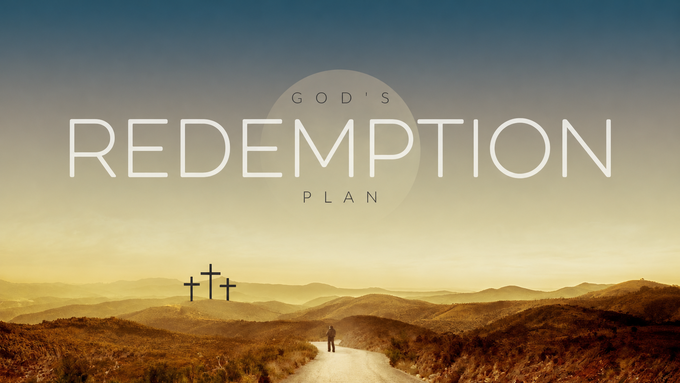
God’s Grand Plan – Daniel 9:16-27

“While I was speaking and praying, confessing my sin and the sin of my people Israel, and presenting my plea before the Lord my God for the holy hill of my God, while I was speaking in prayer, the man Gabriel, whom I had seen in the vision at the first, came to me in swift flight at the time of the evening sacrifice. He made me understand, speaking with me and saying, ‘O Daniel, I have now come out to give you insight and understanding. At the beginning of your pleas for mercy a word went out, and I have come to tell it to you, for you are greatly loved. Therefore consider the word and understand the vision. Seventy weeks are decreed about your people and your holy city, to finish the transgression, to put an end to sin, and to atone for iniquity, to bring in everlasting righteousness, to seal both vision and prophet, and to anoint a most holy place'” (Daniel 9, 20-24, ESV).

In the first year of the rule of Darius the Mede Daniel was reading the book of Jeremiah the prophet and realized that the time of Babylonian exile was almost completed (see Jeremiah 25:11-14; 29:10-14). Within the traditional chronology that places Darius the Mede immediately after Babylon was conquered by Persia, Daniel’s reference to his first year likely points to approximately 538 BC. Since the first captives had been taken from Jerusalem around 605 BC, Daniel recognized that Jeremiah’s 70-year period was nearing completion.

So Daniel began to pray to God pleading for the return of the Jews to the promised land in vs. 3-19. Daniel’s impassioned prayer contained expressions of humility worship, confession, and petition. In the prayer Daniel acknowledged that the destruction of Jerusalem and the exile of Judah were not acts of an arbitrary God, but the consequences of the sinful actions of God’s people, about which they were repeatedly warned.

Daniel concluded that if there was any hope for them, it would be because of God’s mercy and in His righteousness, not their own.

Then, the angel Gabriel appeared to Daniel and communicated the heavenly answer to Daniel’s prayer by reinterpreting the seventy years as seventy weeks (seventy sevens) that are at hand for God’s people (vs. 24). These seventy weeks are understood to refer to seventy seven-year periods of time or 490 years (70 x 7 years).

So, Gabriel informed Daniel that the period of time Daniel was concerned with, the Babylonian exile, was only one part of a more extensive plan of God that would “bring in everlasting righteousness” (vs. 24, cf. Ephesians 1:7-10).

There are several interpretations of the 490-year era that Gabriel revealed. Some view the 490 years figuratively or as approximate and some views interpret the time period literally. Because Gabriel breaks the seventy sevens into three parts, 7 + 62 + 1 (see vs. 25-27), some views even place a gap or period of time between the 69th and 70th weeks so that the last seven-year period of time is at the time leading up to the second coming of Christ.

While there has been much speculation by biblical scholars stipulating when the 70 weeks begins and/or ends, what’s significant to me is that God through the angel Gabriel notified Daniel that the 70 years Daniel is concerned about is but one week of a 70-week comprehensive plan.

God has a grand plan. It’s a plan for our redemption. But, the scope of God’s plan is always immensely greater that what we can know or even understand.

And, you have a role to play in God’s grand plan of redemption. Your job is to hope and trust in Him and make His Will your own will so that you become both a participant and a facilitator of the cosmic plan of God!

In him we have redemption through his blood…. making known to us the mystery of his will, according to his purpose, which he set forth in Christ as a plan for the fullness of time, to unite all things in Christ, things in heaven and things on earth in him. (Ephesians 1:7-10 , ESV)

Qualified – Hebrews 5:1-10

“After he was perfected, he became the source of eternal salvation for all who obey him….” (Hebrews 5:9, CSB).

The Hebrews writer gives us yet another Old Testament perspective of how Jesus is the fulfillment of God’s plan for human redemption. This verse is the conclusion of a broader argument about Jesus’ role as the everlasting High Priest to emphasize His unique qualifications as the both fully human and fully divine Savior.

The Hebrews writer explains that a High Priest was chosen from the Israelite people to make sacrifices for their sins. Because he was human, he had to offer sacrifices for his own sin as well as the sins of the people. In Leviticus 16 God implemented a Day of Atonement in which the High Priest performed a sacrifice for the atonement of the sin for the Israelites. The ceremony, which was conducted annually, began with a sacrifice for the atonement of the sins for the High Priest.

Continue reading →

When God Pays A Visit – Genesis 18

JesusAtTheDoor

“Now the Lord appeared to him by the oaks of Mamre, while he was sitting at the tent door in the heat of the day. When he lifted up his eyes and looked, behold, three men were standing opposite him…He said, ‘I will surely return to you at this time next year; and behold, Sarah your wife will have a son’….Then the men turned away from there and went toward Sodom, while Abraham was still standing before the Lord. Abraham came near and said, ‘Will You indeed sweep away the righteous with the wicked?… Shall not the Judge of all the earth deal justly?’” (Genesis 18:1-2,22-23,25, NASB).

Genesis 18 is a theological nexus that reveals the link between God’s mercy and wrath, between human rebellion and redemption. And it does so in a most dramatic way.

Three defining moments occur in this chapter that reveal the cosmic interaction between mercy and wrath, between human rebellion and divine redemption: 1) the announcement of the birth of Isaac; 2) the plan to destroy Sodom and Gomorrah; and 3) God’s restraint for Lot and his family.

One day while Abraham was sitting on the front porch of his tent, God paid him a visit. God appeared in front of Abraham in the form of three men (a theophany). Some think the three men signify the Trinity, God the Father, God the Son, and God the Holy Spirit. The text indicates that two of them were angels so at least one of the three persons appearing at Abraham’s tent was God Himself,  “the Lord” (see vs. 1, 13, 17, 20, 26, 33, 19:1)!

Continue reading →

Uncreation – Genesis 6:1 – 7:24

When the Lord saw that human wickedness was widespread on the earth and that every inclination of the human mind was nothing but evil all the time, the Lord regretted that he had made man on the earth, and he was deeply grieved. Then the Lord said, “I will wipe mankind, whom I created, off the face of the earth, together with the animals, creatures that crawl, and birds of the sky—for I regret that I made them.” Noah, however, found favor with the Lord (Genesis 6:5-8, CSB).

Sixteen hundred years after Adam and Eve’s initial act of corruption the moral and spiritual condition of humanity had declined to the extent that God was ready to destroy His creation–or at least the part of it that breathed.

But, to gain the full impact of the story of Noah’s ark, it is helpful to understand some of the wordplay between the creation story and the flood story.

Continue reading →

Untold Tenets: Maintaining the Status Quo – Luke 8:26-38

“When they came to Jesus, they found the man from whom the demons had gone out, sitting at Jesus’ feet, dressed and in his right mind; and they were afraid. Those who had seen it told the people how the demon-possessed man had been cured. Then all the people of the region of the Gerasenes asked Jesus to leave them, because they were overcome with fear. So he got into the boat and left” (Luke 8:35-37, NIV)

This series of devotions, Untold Tenets, captures its lessons from lesser-known and sometimes overlooked scriptures that are embedded within or immediately following a well-known bible story or biblical text.

In this well-known and powerful story of demonic possession and exorcism, Jesus purposely went to a Gentile region and ministered there. As He got out of the boat after crossing the Sea of Galilee, a man possessed by many demons ran up to Jesus screaming and begging Jesus not to torture them or send them to the underworld prison of evil spirits.

Continue reading →

Resident Evil, Part 3 – Genesis 6:5-7

good_evil

“The Lord saw that humanity had become thoroughly evil on the earth and that every idea their minds thought up was always completely evil. The Lord regretted making human beings on the earth, and he was heartbroken. So the Lord said, ‘I will wipe off of the land the human race that I’ve created: from human beings to livestock to the crawling things to the birds in the skies, because I regret I ever made them’” (Genesis 6:5-7, CEB).

It didn’t take long after the Creation for people to become so evil that God was sorry He created them. Evil must have spread among human beings at an exponential rate.

Evil seems to have grown simultaneously with the human race because God wanted to destroy the whole human race. Apparently everyone, or almost everyone, was evil!

Did God make a big mistake when He created human beings? If the humanity that God created had become thoroughly evil, then did God create evil?

Continue reading →

Creation Story: Part 1, The Naked Truth – Genesis 1-3

Adam&EveInGardenOfEden“Adam and his wife were both naked, and they felt no shame” (Genesis 2:25, NIV).

Lately, I’ve been considering and re-considering the Creation Story in the first chapters of Genesis.

When I read the Creation Story, I think I typically read it from a scientific point of view, looking for explanations of human origins. But, the more I read it the more I’m convinced that neither the writer of the Creation Story nor the Spirit of God who inspired the writing of the story was trying to provide a scientific explanation of the beginnings of the universe and origin of human beings.

So, what I believe the story is about is relationship and restoration. Human beings were created in the image of God to live in eternal relationship with Him. They defied God and turned to their own devices and because they were created in the image of God, their defiance was a spiritual defiance of cosmic proportions, which impacted the whole created order. Thus, only God could bring restoration to His created order and to His eternal relationship with people.

When read without the baggage of scientific interpretation, the Creation Story provides considerable spiritual insight into the human psyche and the character of God. It may not exactly explain in scientific terms how the universe began, but it does give a good explanation of why we are the way we are.

In fact, the Creation Story exposes the naked truth about human defiance of God’s order and God’s response to this defiance.  In the Creation Story Adam and Eve roamed completely naked in the Garden of Eden where God placed them to live. I guess you could say that the Garden of Eden was the world’s first nudist colony!

Continue reading →

Whatever It Takes – Romans 11:32

“whateverittakesFor God has imprisoned everyone in disobedience so he could have mercy on everyone.” (Romans 11:32, NLT).

In Romans 9-11 the Apostle Paul addressed the theological question raised by the Roman Christians about the unbelief of so many Jews. Why had God promised salvation to Israel, His chosen people, and so few Jews were being saved?

Continue reading →

Grace Glue – Romans 8:28, Part 4

BrokenCeramicFigurine-Trans“And we know that God causes all things to work together for good to those who love God, to those who are are called according to His purpose” (Romans 8:28, NASB).

In Part 3 of this series of meditations on Romans 8:28, we determined that the good that God is causing is not about you or your problems, it’s about you being a part of God’s greater good, God’s will. And our individual and collective lives then acquire significance by becoming part of God’s grand plan and purpose for His creation.

Continue reading →

The Greater Good – Romans 8:28, Part 3

Greater_Good“And we know that God causes all things to work together for good to those who love God, to those who are are called according to His purpose” (Romans 8:28, NASB).

In Part 1 and Part 2 of this series of meditations on Romans 8:28 we established that we are broken people living in a broken world and God is redeeming us and all His creation.  God’s redemptive plan for the created order is not an accident of creation but is God’s design, His eternal plan.

Continue reading →