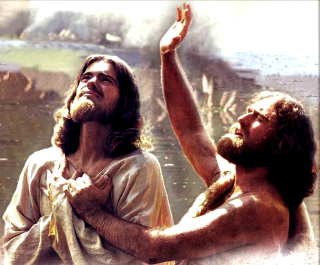
Jesus Is Just Alright With Me – Philippians 3:8-12

“But even beyond that, I consider everything a loss in comparison with the superior value of knowing Christ Jesus my Lord. I have lost everything for him, but what I lost I think of as sewer trash, so that I might gain Christ and be found in him. In Christ I have a righteousness that is not my own…but rather from the faithfulness of Christ. It is the righteousness of God that is based on faith. The righteousness that I have comes from knowing Christ, the power of his resurrection, and the participation in his sufferings. It includes being conformed to his death so that I may perhaps reach the goal of the resurrection of the dead… I pursue it, so that I may grab hold of it because Christ grabbed hold of me for just this purpose. “ (Philippians 3:8-12, CEB).

When I was in college the rock band, The Doobie Brothers, recorded and released the song, “Jesus Is Just Alright With Me.” Although the song was originally written as a gospel song, The Doobie Brothers’ recording was meant for listeners of pop and rock music. The song became quite popular, however, among counterculture Christians, particularly those involved with the Jesus Movement of the 1970s. The song continues to be a staple of playlists on classic rock radio stations.

I’m sure as a member of the Jesus Movement in the 1970s I sang the song many times at student prayer meetings on my college campus. I still like the song today.

Recently, I heard the song on one of those classic rock radio stations and began to reflect on the perspective posed by the song: “Jesus is just all right with me!” And, it occurred to me that the sentiment expressed in the song that I loved so much as a young Jesus freak actually confirms what can go wrong with my faith as a mature Christian.

I like being comfortable with Jesus. He’s cool with me! So, it’s an easy and convenient place for my faith to reside when it’s a relationship that is clean, friendly and socially acceptable.

Certainly, Jesus is just all right with me isn’t exactly the expression of faith in Christ that the Apostle Paul describes in this declaration from his letter to the Philippians.

Continue reading

Empowered to Witness – Numbers 11:16-30

And I will take some of the Spirit that is on you and put it on them…” (Numbers 11:17, ESV).

During their wilderness wanderings God told Moses to select seventy elders to help him judge and lead the people of Israel.  Moses gathered the elders and placed them around the circumference of the tabernacle. Then, God poured out His Spirit on them as they were gathered around the tabernacle and they prophesied.

Two of the elders were not present at the tabernacle when the Spirit was poured out. Yet, these two also received the Spirit and prophesied while they were still in the camp.

Continue reading

Stopping and Going with God – Numbers 9:15-23

“At the command of the Lord they camped, and at the command of the Lord they set out” (Numbers 9:23, ESV).

After their escape from Egyptian slavery, the Israelites constructed a transportable tabernacle to worship God during their Sinai wilderness wanderings. God demonstrated His presence among them by covering the tabernacle with a cloud by day and the appearance of fire by night.

The cloud and appearance of fire indicated the presence of God’s Spirit with His chosen people.

Whenever the cloud lifted over the great tent, the Israelites would set out and continue on their journey and then encamp in the place where the cloud would settle. They might set up camp for for a few days, a month and even longer when the cloud settled over the tabernacle (Numbers 9:22). Undoubtedly, it was quite a feat to disassemble and reassemble the tabernacle when the cloud lifted (see Numbers 1:50–52; 3–4).

God leads His people by setting and revealing a path for each believer’s life. This verse  indicates that there are two important aspects to God’s guidance: stopping and going.  Stopping means remaining and waiting on God to lead and going means moving forward when He leads in a new direction.

Continue reading

Some Good Advice – Numbers 5:5-7

“The Lord said to Moses, ‘Say to the Israelites: ‘Any man or woman who wrongs another in any way and so is unfaithful to the Lord is guilty and must confess the sin they have committed. They must make full restitution for the wrong they have done, add a fifth of the value to it and give it all to the person they have wronged'” (Numbers 5:5-7, NIV).

Many of the laws God decreed concerned the offering of sacrifices in the tabernacle as atonement for sin. Embedded in these acts of sacrifice were some fundamental principles for maintaining good relationships with God and other people.

The principle for maintaining good relationships with God and other people expounded in this verse is one that I’ve used with my children on several occasions when their conduct towards other kids or adults was inappropriate. You probably have, too!

And, it’s certainly one us adults should follow as well.

Continue reading

Holy, Holy, Holy – Leviticus

“For I am the Lord your God. You must consecrate yourselves and be holy, because I am holy” (Leviticus 11:44, NLT).

A quick read through the book of Leviticus (which is generally the way I read it) may lead you to believe that the focus of the book is on obedience to God’s law–obedience to a set of moral laws that seems to establish a code of conduct practically impossible to follow.

Upon closer inspection you will see that the theme of the book is holiness: “You must distinguish between what is sacred and what is common” (Leviticus 10:10, NLT). What’s behind the  laws, and is stated repeatedly throughout the book, is a description of God’s holiness.

So, if the Lord is holy, the people who worship Him must be holy because only holy can be in the presence of Holy. Yahweh is certainly not a god who can be worshiped from afar. He is the “I AM” who resides among and within His people.

Continue reading

Forever Love – Exodus 20:4-6

“You shall not make for yourselves an image in the form of anything in heaven above or earth beneath or in the waters below. You shall not bow down to them or worship them, for I, the Lord your God am a jealous God, punishing the children for the sin of the parents to the third and fourth generation of those who hate me, but showing love to a thousand generations for those who love me and keep my commandments” (Exodus 20:4-6, NIV).

These verses are the 2nd Commandment of the Ten Commandments. Although I’ve read and repeated the 2nd Commandment many times, I’ve never paid much attention to the second part of the commandment, which explains the consequences of obeying or not obeying the commandment.

But, God uses the pronouncement of a curse and blessing in the 2nd Commandment to make a striking contrast between the everlasting effects of His boundless love for those who worship and obey Him with the exigency of punishment for idolators.

Continue reading

The Crooked Path – Ecclesiastes 7:13-14

“Consider God’s work! Who can straighten what God has made crooked? When times are good, enjoy the good; when times are bad, consider: God has made the former as well as the latter so that people can’t discover anything that will come to be after them” (Ecclesiastes 7:13-14, CEB).

How great is God’s work in His Creation. God knows exactly how He has made us and what we need to live fulfilling lives.

These verses notify us that although God is sovereign, our lives aren’t predetermined. Good times and bad times are both part of life. They make life a crooked path.

Continue reading

Passing Muster – Exodus 30:11-14

“Then the Lord said to Moses, ‘When you take a census of the Israelites to count them, each one must pay the Lord a ransom for his life at the time he is counted. Then no plague will come on them when you number them. Each one who crosses over to those already counted is to give a half shekel… This half shekel is an offering to the Lord. All who cross over, those twenty years old or more, are to give an offering to the Lord'” (Exodus 30:13-14, NIV).

The census was actually a way to determine a record of military manpower. But, when Moses enlisted men for military service, he was also to take a ransom from each twenty-year-old or more male and use it for the construction and ministry of the Tabernacle.

“Crossing over to those already counted” literally meant passing over to those who are mustered. It meant joining the ranks of the enlisted men. By passing muster the Israelite male effectively became a soldier in the Israeli militia–the Lord’s army.

Continue reading

Ethics: When You Behave Like You Believe – Proverbs 21:3


“To do what is right and just is more acceptable to the Lord than sacrifice” (Proverbs 21:3, NIV).

Sometimes we don’t behave consistently with what we believe–or we claim to believe. What we purport is not how we comport!

Our behavior is defined by our beliefs–what we really, really believe, not what we say we believe.

It’s called ethics.

When we are more concerned with pleasing others, going along, or not standing out from the crowd than we are about doing the right thing, then we compromise what we believe.  We behave unethically.

And, it begs the question: If you don’t behave it, do you really believe it?

Continue reading

Annoying God – Genesis 32:24-30

“So Jacob was left alone, and a man wrestled with him till daybreak. When the man saw that he could not overpower him, he touched the socket of Jacob’s hip so that his hip was wrenched as he wrestled with the man. Then the man said, ‘Let me go, for it is daybreak.’ But Jacob replied, ‘I will not let you go unless you bless me.’ … Then he blessed him there. So Jacob called the place Peniel, saying, ‘It is because I saw God face to face, and yet my life was spared.'” (Genesis 32:22-30, NIV).

The method Jacob used here to obtain God’s blessing seems rather counter-intuitive to our innocuous efforts in seeking God. While we think we must approach God with religious formality and terminology to obtain His blessing, Jacob used an alternative methodology.  Jacob wrestled with and held on to God until God blessed him.

Prior to his wrestling match with God, Jacob was in the throes of a dilemma. God had commanded him to repatriate the land He had promised to Jacob’s father and grandfather, Isaac and Abraham. But, in order to do so Jacob had to confront his estranged brother, Esau–from whom Jacob had stolen his birthright–and Esau’s army of 400 men.

Anticipating a disastrous outcome to his rendezvous with Esau, Jacob had taken his family to a safe place. Then, Jacob proceeded to a place where he could be alone to seek God and plead for deliverance from Esau and reassure himself that he was doing God’s will by returning to the promised land. There, he encountered a man (an angel or theophany) and wrestled with him all night.

Jacob knew that he was wrestling with God (or God’s messenger) and gripped Him until the man promised God’s protection and deliverance on his journey to and settlement in the promised land. Despite the man wounding Jacob’s hip, Jacob continued to grasp the man until He agreed to bless him.

Jacob was what you might call indefatigable. Indefatigable means not yielding to fatigue, incapable of being tired out. Tireless or persistence is the more common way to describe this trait. Annoying and even obnoxious is this attribute carried to the extreme.

Continue reading