It’s Providential – Genesis 30

Simply stated, providence is God’s intervention in His creation. The theological concept of providence incorporates the foreseeing care and guidance of God. In fact, the Latin root of the English word has the sense of  knowledge of the future.

So, because God knows the future, He controls the present.

Providence is probably the main point in which a biblical worldview comes into conflict with contemporary worldviews. Certainly, the Old Testament worldview was more respective of God’s providence than is the modern, scientific view that asks “Why” and “How” about every occurrence in life and nature.

The Old Testament writers seem to have a rich understanding of God’s providence. To the Old Testament writer, it’s all providential!

The two major events from the life of Jacob described in Genesis 30 illustrate the Old Testament perspective of providence.


Continue reading

Folding – Romans 12:1-2

sheet_of_paper“So, brothers and sisters, because of God’s mercies, I encourage you to present your bodies as a living sacrifice that is holy and pleasing to God. This is your appropriate priestly service. Don’t be conformed to the patterns of this world, but be transformed by the renewing of your minds so that you can figure out what God’s will is—what is good and pleasing and mature.” (Romans 12:1-2, CEB).

This meditation is a hands-on lesson in how God works in our lives. Give it a try.

  1. Take a blank sheet of paper and in the middle of the sheet of paper write in large letters:

MY WILL

  1. Then in the top left-hand corner write in smaller letters:

GOD’S
PERFECT
WILL

  1. Fold the paper in half folding the bottom half behind and to the top so that the words are still showing.
  2. Then fold the paper in half folding the right half behind and to the left so that the words are still showing.
  3. Again, fold the paper in half folding the bottom half behind and to the top so that the words are still showing.
  4. And, again fold the paper in half folding the right half behind and to the left so that the words are still showing.
  5. You should  now have a small square of paper in your hands that is 1/16th of the original paper size with the words printed on it: GOD’S PLAN FOR MY LIFE. These words probably fill or almost fill the small square of paper in your hand.

Here’s the point of this exercise:

We like to think of God’s will as something that is being revealed a little at a time. It’s like something we discover as if it is unfolding before us.

Actually, finding God’s will is more like folding than unfolding. It’s more like the displacement of our own will in favor of God’s will. It’s a place God leads us, not a place we discover.

Continue reading

God Is With You. No, God Is In You. – Haggai 1-2

indwelling-holy-spirit“Then Haggai, the Lord’s messenger, gave the Lord’s message to the people: I am with you, says the Lord… be strong, all you people of the land, says the Lord… Work, for I am with you, says the Lord” (Haggai 1:13, 2:4, CEB).

The Lord told Haggai to encourage the people to get to work to rebuild the Temple. God encouraged them to get started and reminded them that they were able to do it because He was with them.  God reminded them in both chapters of this two-chapter Old Testament book.

Now, God is with us by the indwelling presence of the Holy Spirit. And He has an assignment for each of us that accomplishes His purposes.  So, we should be bold and get to work doing His will because “I am with you, says the Lord!”

Here’s the problem: Instead of being bold, we are reticent about doing God’s will. We hesitate because we don’t know what His assignment is for us.

Or we think we don’t know. Or we think we can’t accomplish His assignment for us because it’s so overwhelming.

Continue reading

God’s Will? Go Figure… – Romans 12:1-2

God's Will-Go Figure“So, brothers and sisters, because of God’s mercies, I encourage you to present your bodies as a living sacrifice that is holy and pleasing to God. This is your appropriate priestly service. Don’t be conformed to the patterns of this world, but be transformed by the renewing of your minds so that you can figure out what God’s will is—what is good and pleasing and mature” (Romans 12:1-2, CEB).

In this life the only right you truly possess is your right to your self–that is, your will. Your will is the the unique quality of self or being that God has created to make you distinctively human: The Lord God said, ‘The human being has now become like one of us, knowing good and evil'” (Genesis 3:22, CEB).

In other words, human beings have free will. And, they are free to use their wills to choose good or evil.

You are free to choose how you live your life. You can choose to live according to your own will or you can choose to live according to God’s will.

Continue reading

Living Providentially, Part 2: Failing Smart – Proverbs 20:24, Romans 8:28

failure“A person’s steps are from the Lord; how then can people understand their path?” (Proverbs 20:24,CEB).

“We know that God works all things together for good for the ones who love God, for those who are called according to his purpose” (Romans 8:28, CEB).

According to the Apostle Paul in Romans 8:28, our steps are indeed from the Lord and we can know and understand God’s will and where He is leading us. We can live providentially.

But, when things go bad, we act like it won’t work out. We don’t believe these bad things can be part of the “all” things that work together for good.

Continue reading

Living Providentially, Part 1: Good Happens – Proverbs 20:24, Romans 8:28

failure“A person’s steps are from the Lord; how then can people understand their path?” (Proverbs 20:24,CEB).

“We know that God works all things together for good for the ones who love God, for those who are called according to his purpose” (Romans 8:28, CEB).

Does Solomon ask a rhetorical question in this proverb? How can we know what will happen to us in life since it is all determined by God?

Or, is he decrying the fact that it is impossible for human beings to know God’s will because we’re not spiritual enough to fully understand God?

Maybe he is simply issuing a challenge: God has a plan for your life, so discover what it is!

Continue reading

God Is Good! All The Time? – Nahum 1:1-8

God-is-Good-All-the-Time“The Lord is good, a haven in a day of distress. He acknowledges those who take refuge in him. With a rushing flood, he will utterly destroy her place and pursue his enemies into darkness” (Nahum 1:7-8, CEB).

Nahum prophesied during a time when Judah was attempting to gain independence from its Assyrian overlords. His prophecy foretold the destruction of the Assyrian capital of Nineveh.

Nahum begins his prophecy on the downfall of Assyria by laying a theological framework describing the character of God. In verse 1 Nahum says God is jealous and vengeful, full of wrath, and rages against His enemies. He says that although God is great in power, God is calculating  and severe when administering justice: “Who can stand before his indignation? Who can confront the heat of his fury?” (vs 6).

Continue reading

God’s End Game – Lessons from John 6

GodsEndGame“They asked, ‘What must we do in order to accomplish what God requires?’ Jesus replied, ‘This is what God requires, that you believe in him whom God sent'” (John 6:28-29, CEB).

Most Christians are trying to find and do God’s will in their lives. In fact, a lot of our personal prayer and Bible study efforts are focused on knowing and doing God’s will.

As we attempt to find and do God’s will, we have a tendency to gauge whether a thing is God’s will by our circumstances. If things are going our way and we’re successful, then we must be doing God’s will. But if we’re facing difficulties and things aren’t going as planned, then we must be missing God’s will.

Continue reading

Willing To Do God’s Will – Philippians 2:12-13

Willing“Work out your salvation with fear and trembling; for it is God who is at work in you, both to will and to work for His good pleasure” (Philippians 2:12-13, NASB).

Recently I told a friend about an important life decision that I had made, yet I hadn’t received specific guidance from the Lord that this was what I should do. In my heart it just seemed to be the right decision and one that pointed in the same direction as God has been leading me.

My friend then quoted Psalm 37:23 (ESV): “The steps of a man are established by the Lord, when he delights in his way.”

At first I thought that doesn’t seem very spiritual. How can the everyday decisions I make be established by the Lord? After all, I make a lot of bad decisions, too!

Continue reading

How Not to Accomplish God’s Will – I Samuel 4:1-16

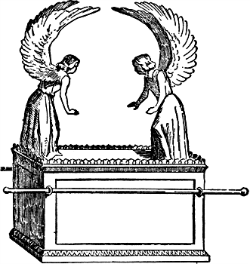
arkofcovenant“The man said to Eli, ‘I am the one who came from the battle line. Indeed, I escaped from the battle line today.’ And he said, How did things go, my son?” Then the one who brought the news replied, ‘Israel has fled before the Philistines and there has also been a great slaughter among the people, and your two sons also, Hophni and Phinehas, are dead, and the ark of God has been taken'” (1 Samuel 4:16-19, NASB).

When the Philistines captured the ark of the covenant from the Israelites, it was the direct result of the presumption of the Israelites that God was on their side no matter what they did or didn’t do.

The ark of the covenant was the visible sign of the presence and power of God. Until this time the ark had been housed in the tabernacle (tent sanctuary) at Shiloh, where it resided since the Israelites entered the promised land (Joshua 18:1). Now, Israel was disastrously defeated by the Philistines and the elders of Israel realized that the defeat was the work of the Lord.

Continue reading