Timeless Faith – Hebrews 11

“Now faith is the reality of what is hoped for, the proof of what is not seen. For by this our ancestors were approved….. These all died in faith, although they had not received the things that were promised…. All these were approved through their faith, but they did not receive what was promised, since God had provided something better for us, so that they would not be made perfect without us” (Hebrews 11:1-2,13,39-40, CSB).

In Hebrews 11, the “faith” chapter, the Hebrews writer defines faith and then provides a chapter-long litany of Old Testament examples.

Unfortunately, for us modern, empirical types, the Hebrews writer’s definition of faith is the antithesis of the scientific standards of observable data. Faith according to the Hebrews writer is not based on observable data but it’s based on the “proof” of the unseen. It’s inscrutable!

And, while having faith means we have hope for something we do not see, it also provokes us to take certain actions in our lives (vs. 2).

Continue reading

The Scarred God – John 20:24-29

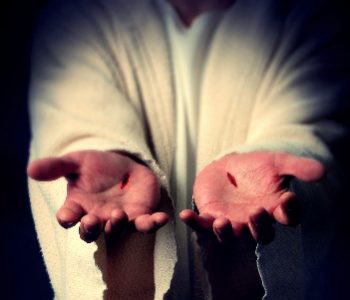
Then he said to Thomas, “Put your finger here and look at my hands. Reach out your hand and put it into my side. Don’t be faithless, but believe.” Thomas responded to him, “My Lord and my God! Jesus said, “Because you have seen me, you have believed. Blessed are those who have not seen and yet believe.” (John 20:27-29, CSB)

NOTE: In the title of this post don’t misread “Scarred” meaning disfigured as “Scared” meaning afraid.

Did you know that Jesus was talking about you when He spoke these words to Thomas during one of His appearances to His disciples after His resurrection?

Christians today face a dilemma they have faced since Jesus made this statement to Thomas—that of living in that period in time after Christ’s first coming and before His second coming.

Some theologians have called the age in which we live “between the times,” meaning the period of time between Christ’s first and second comings.

While the first generation of Christians was closely connected to Christ’s first coming, all Christians since have had to address the ambiguity of the time between His first and second comings.

Continue reading

Signs – John 6:22-59

“Jesus answered, ‘Truly I tell you, you are looking for me, not because you saw the signs, but because you ate the loaves and were filled. Don’t work for the food that perishes but for the food that lasts for eternal life, which the Son of Man will give you, because God the Father has set his seal of approval on him.’ ‘What can we do to perform the works of God?’ they asked. Jesus replied, ‘This is the work of God—that you believe in the one he has sent.’ “What sign, then, are you going to do so that we may see and believe you?’ they asked” (John 6:26-30, CSB).

The signs or miracles Jesus performed weren’t so much to get people to believe in Him as to validate His Messiahship. Jesus was more interested in granting people eternal life than in performing miracles to heal or feed them.

Jesus wanted more from our belief than just believing in the miracles He performed.

Belief in His Messiahship was the belief Jesus wanted His disciples to have. Jesus described it as a life-sustaining belief: “Truly I tell you, unless you eat the flesh of the Son of Man and drink his blood, you do not have life in yourselves. The one who eats my flesh and drinks my blood has eternal life, and I will raise him up on the last day, because my flesh is true food and my blood is true drink” (vs. 53-55).

Continue reading

It’s Personal – Mark 8:27-38

“’Who do people say that I am?’…. ‘But who do you say that I am?’” (Mark 8:27-29, ESV).

Near the end of His ministry Jesus asked His disciples what people were saying about Him? Who did they think He was?

His disciples answered that some thought He was John the Baptist or one of the ancient prophets back from the dead.

Then Jesus asked His disciples who they thought He was. Peter immediately responded that He was the Messiah. Apparently, that was the right answer because Jesus commanded His disciples to tell no one.

To Jesus it didn’t matter what people in general thought about Him. What mattered to Him was what His disciples in particular thought about Him.

Continue reading

The Wrestling Match – Genesis 32:27-31

“He said to Jacob, ‘What’s your name?’ and he said, ‘Jacob.’ Then he said, ‘Your name won’t be Jacob any longer, but Israel, because you struggled with God and with men and won.’ Jacob also asked and said, ‘Tell me your name.’ But he said, ‘Why do you ask for my name?’ and he blessed Jacob there. Jacob named the place Peniel, ‘because I’ve seen God face-to-face, and my life has been saved.’ The sun rose as Jacob passed Penuel, limping because of his thigh” (Genesis 32:27-31,CEB).

I once heard it preached that choosing to believe Jesus was the Son of God and died for our sins so we could have eternal life was more plausible than choosing not to believe.  Because, if you believed and got to the end of your life and it wasn’t true, you still lived a good life with no regrets. But, if you didn’t believe and it was true then you risked a dreadful eternity.

In other words, it is more logical (and eternally safe) to believe in God than not to believe. And, we get to choose…

While our modern minds try to analyze everything, even faith in God, and make it logical and rational and human-centric, the biblical pattern is actually something quite different: God chooses us and we choose whether to accept His challenge or not.

And, it’s not like a debate.

It’s more like a wrestling match!

In fact, struggling with God is the normal Christian life.

Continue reading

In God We Entrust – 1 Peter 2:21-24

InGodWeTrustDollarBill“And while being reviled, He did not revile in return; while suffering, He uttered no threats, but kept entrusting Himself to him who judges righteously” (1 Peter 2:23, NASB).

A law passed by Congress and approved by the President on July 30, 1956, declared “IN GOD WE TRUST” to be the national motto of the United States. This motto is engraved or printed on U.S. coins and currency.

So what’s so important about trust in God that we wanted it printed on our currency? It’s meant to show that the United States is a nation that trusts in God, a nation that recognizes God’s sovereignty over all nations on Earth.

“Trust” is a firm belief in the reliability, truth, ability, or strength of someone or something. Trust in God means recognizing or acknowledging that God is Sovereign and Mighty over His Creation.

But, in these verses the Apostle Peter tells us that when Jesus experienced suffering, He entrusted Himself to God.

Continue reading

Resurrection! Part 1: Pain Relief – John 11:1-16

pain_relief“When Jesus heard it he said, ‘This sickness will not end in death but is for the glory of God, so that the Son of God may be glorified through it'” (John 11:4, HCSB).

This meditation is Part 1 of a four-part series from the story of the raising of Lazarus from death.  In this opening part of the story of Lazarus, Jesus received a message from Lazarus’ sisters, Mary and Martha, that their brother (and Jesus’ dear friend) was on his deathbed. They wanted Jesus to come and heal Lazarus so he wouldn’t die.

Continue reading

A Glorious Display – John 2:11

WaterIntoWine“He displayed His glory and His disciples believed in Him.”  (John 2:11, HCSB).

When Jesus worked His first miracle at the wedding at Cana, changing the water into wine, the Apostle John concludes that it was a glorious display!

Although this first miracle was a quiet miracle–large pots of water suddenly were turned into wine–it apparently didn’t go unnoticed by Jesus’ disciples.

Continue reading

Believing or Belonging? – Acts 11:26

“The disciples were first called Christians at Antioch.” (Acts 11:26, HCSB)The term “Christian” occurs only three times in the New Testament.

Besides this verse, in Acts 26:28 King Herod Agrippa asked if the Apostle Paul was trying to persuade him to become a Christian and in 1 Peter 4:16 the Apostle Peter referred to suffering for being a Christian.

The word for Christian in the Greek is Christianos and comes from christos, meaning “anointed one” with a modifier borrowed from Latin to denote adhering to, or even belonging to, as in slave ownership.

Continue reading

Receiving is Believing – John 1:12-13

“He came to his own, and his own people did not receive him. But to all who did receive him, who believed in his name, he gave the right to become children of God, who were born, not of blood nor of the will of the flesh nor of the will of man, but of God.” Have you ever tried to give someone advice and they were not interested in your help? You give the advice but it is not received. And if your advice is not received, then it must not have been believed in the first place. Although a person may know about Jesus, that person must receive Him to become a child of God. Whether or not John is saying in these verses that “receiving” is the same as “believing,” the point is that the right to become a child of God is bestowed by Christ based on an act of faith—believing that Jesus is God and that He came into this world as a human being and died as payment for your sins and was raised from the dead to eternal life so that you can receive eternal life.