Paying Attention – Acts 16:11-15

“A God-fearing woman named Lydia, a dealer in purple cloth from the city of Thyatira, was listening. The Lord opened her heart to respond to what Paul was saying” (Acts 16:14, CSB).

The events in these verses take place during Paul’s second missionary journey. Paul and Barnabas had decided to go visit the churches they had established during their first missionary journey. When they disagreed about who should be on their evangelistic team, they parted company and Paul selected Silas to accompany him on his second missionary journey.

Paul and Silas set out across the regions of Phrygia and Galatia, which is in the eastern half of the modern country of Turkey. But, Paul’s plans to journey north into the region of Bithynia were constrained by the Holy Spirit and instead they traveled west to Troas on the coast of the Aegean Sea.

At Troas Paul had a vision of a man pleading with him to cross over the Aegean Sea into Macedonia, just to the north of the modern country of Greece. Paul and Silas would evangelize in Macedonia and eventually travel south into the Greek cities of Athens and Corinth.

Continue reading
Confusion – Genesis 10-11

Then the Lord came down to look over the city and the tower that the humans were building. The Lord said, “If they have begun to do this as one people all having the same language, then nothing they plan to do will be impossible for them. Come, let’s go down there and confuse their language so that they will not understand one another’s speech.” So from there the Lord scattered them throughout the earth, and they stopped building the city. Therefore it is called Babylon, for there the Lord confused the language of the whole earth, and from there the Lord scattered them throughout the earth (Genesis 11:5-9, CSB).

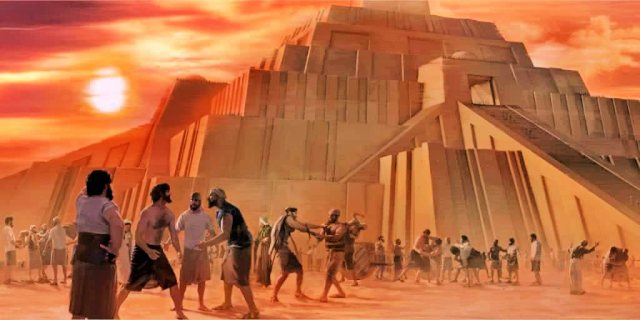
The tower of Babel was probably a ziggurat, which was a common archaeological structure in ancient Mesopotamian cities. Archaelogists have unearthed dozens of ziggurats in the region, the most famous being the Great Ziggurat of Ur in Iraq. It is a huge, 4,100 year old structure made up of more than 700,000 baked bricks.

Ziggurats, unlike the pyramids in Egypt that were tombs for pharaohs, were stairways for the gods. The defining structure of a ziggurat was a long stairway leading to the top where a room with a bed and table was prepared for the deity. The stairway was not for people to climb up, but for the god to come down.

In these verses God “came down” to look over the city and the tower the people were building up to heaven. But, God didn’t need to be invited or enticed to come down from heaven to the earth nor did He need to descend a stairway to facilitate His descent.

Continue reading

God’s Power of Attorney – John 14:8-17

“Truly I tell you, the one who believes in me will also do the works that I do. And he will do even greater works than these, because I am going to the Father. Whatever you ask in my name, I will do it so that the Father may be glorified in the Son. If you ask me anything in my name, I will do it…. And I will ask the Father, and he will give you another Counselor to be with you forever. He is the Spirit of truth” (John 14:12-17, CSB).

As Jesus and His disciples shared a last meal together, Judas Iscariot’s impending betrayal was revealed by Jesus to His disciples. Once Judas left the dinner to carry out his unscrupulous scheme, Jesus spoke openly and intimately with His remaining disciples about the events that were about to unfold and what they meant. John 13:31 – 17:26 replays the conversation Jesus had with His disciples.

As Jesus was explaining to His disciples that the only way to know God the Father was through Him, Philip asked Him to show them the Father and that’s all they would need to believe. Jesus reminded the disciples that the Father was in Him and the words He spoke and miracles He performed were by the power of God the Father.

Then, Jesus added that not only did He have the power to do God’s works, He also had the power to enable those who believed in Him, His disciples, to perform the miracles He performed and even greater ones than He did! When Jesus said to ask in His name and He will do it, He was granting His power of attorney.

Continue reading

You Always Have the Poor – John 12:1-7

Then one of his disciples, Judas Iscariot (who was about to betray him), said, “Why wasn’t this perfume sold for three hundred denarii and given to the poor?”…. Jesus answered, “Leave her alone; she has kept it for the day of my burial. For you always have the poor with you, but you do not always have me.” (John 12: 4-8, CSB).

A group of Christian individuals and organizations recently developed an advertising campaign for American TV called “He Gets Us” (www.hegetsus.com). This group states that they are a diverse group of people passionate about the authentic Jesus of the Bible who want everyone to understand Jesus as he’s depicted in the Bible.

The campaign has purchased airtime to broadcast its commercials on national television. Recently, the campaign purchased airtime for two commercials during SuperBowl LVII at a cost of millions of dollars for each 30-second spot. The campaign says it plans to to invest a billion dollars on spreading its message of the Jesus of the Bible.

Spending millions of dollars on “messaging” has, of course, generated criticism from both the socially-conscious Christians on the theological left and the fundamentalist Christians on the theological right. The biggest criticism of the campaign, however, is its spending on marketing, which is seen as money that could be spent for funding community programs for the poor and advocacy for the oppressed.

Continue reading

Untold Tenets: Strategic Plan – John 4:1-42

“Many of the Samaritans from that town believed in him because of the woman’s testimony, ‘He told me everything I ever did.’ So when the Samaritans came to him, they urged him to stay with them, and he stayed two days. And because of his words many more became believers. They said to the woman, ‘We no longer believe just because of what you said; now we have heard for ourselves, and we know that this man really is the Savior of the world'” (John 4:39-42, NIV).

This series of devotions, Untold Tenets, captures its lessons from lesser-known and sometimes overlooked scriptures that are embedded within or immediately following a well-known bible story or biblical text.

John 4:1-42 contains the familiar story of the Samaritan woman or the woman at the well. In this story Jesus spoke the renowned “living water” declaration: “Whoever drinks the water I give them will never thirst. Indeed, the water I give them will become in them a spring of water welling up to eternal life” (vs. 14). Jesus also explained to the Samaritan woman that “God is spirit, and his worshipers must worship in the Spirit and in truth” (vs. 24).

Because of the spiritual sagacity of the living-water and Spirit-and-truth-worship declarations, what may go unnoticed in this story is the strategic relevance of Jesus’ meeting with the Samaritan woman at Jacob’s well near Sychar, Samaria, to His post-resurrection Great Commission to His disciples: “But you will receive power when the Holy Spirit comes on you; and you will be my witnesses in Jerusalem, and in all Judea and Samaria, and to the ends of the earth” (Acts 1:8, NIV).

Continue reading

Witnessing 101 – John 4:1-42

“Jesus said to her, ‘Everyone who drinks of this water will be thirsty again, but whoever drinks of the water that I will give him will never be thirsty again. The water that I will give him will become in him a spring of water welling up to eternal life.’ The woman said to him, ‘Sir, give me this water, so that I will not be thirsty or have to come here to draw water’” (John 4:13-15, ESV).

In the familiar story of Jesus and the woman of Samaria in John 4:1-42, Jesus provided a perfect demonstration of personal witnessing:

Continue reading

Ineffective Christians – 2 Peter 1:3-11

“For this very reason, make every effort to supplement your faith with virtue, and virtue with knowledge, and knowledge with self-control, and self-control with steadfastness, and steadfastness with godliness, and godliness with brotherly affection, and brotherly affection with love. For if these qualities are yours and are increasing, they keep you from being ineffective or unfruitful in the knowledge of our Lord Jesus Christ. (2 Peter 1:5-8, ESV).

The Apostle Peter indicates in these verses that Christians can be ineffective! I’m sure you’ve heard of an ineffective employee or an ineffective manager, but an ineffective Christian?

“Ineffective” simply means not producing results, not productive–or as Peter defines it for Christians, not fruitful.

An ineffective employee doesn’t produce results. An ineffective Christian doesn’t bear fruit.

Continue reading

Never Met A Man I Didn’t Like – Numbers 15:13-16

“Every native Israelite shall do these things in this way, in offering a food offering, with a pleasing aroma to the Lord. And if a stranger is sojourning with you, or anyone is living permanently among you, and he wishes to offer a food offering, with a pleasing aroma to the Lord, he shall do as you do. For the assembly, there shall be one statute for you and for the stranger who sojourns with you, a statute forever throughout your generations. You and the sojourner shall be alike before the Lord. One law and one rule shall be for you and for the stranger who sojourns with you” (Numbers 15:13-16, ESV).

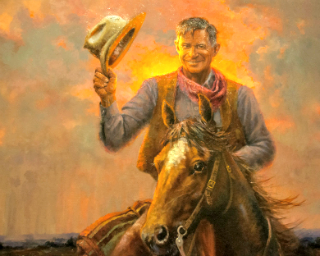
Will Rogers is a folk-hero of mine and of many of my fellow “Okies.” One of his most well-known sayings is this: “I never met a man I didn’t like.” Will Rogers endeavored to affirm the humanity of people–even those he didn’t know–by treating them with respect and good will.

In these verses from Numbers God seems to have a similar perspective about human beings–God never met a person He didn’t love!

Numbers 15, which describes laws for offering and sacrifice, is inserted between the stories of two rebellions: Israel’s refusal to enter the promised land in Chapter 14 and the rebellion led by Korah against Moses’ leadership in Chapter 16. After the Israelites’ rebellion in Chapter 14 God had determined to destroy the Hebrew nation. Upon Moses’ intercession God sentenced the Exodus generation of Israelites to perish in the wilderness.

So, Chapter 15 marks the point where the plan for entering the promised land became the punishment of wandering in the wilderness for the next 40 years. It indicates the beginning of the end of the Exodus generation who rebelled against Moses’ leadership to enter the promised land. Perhaps the Chapter 15 worship statutes are an appeal by God for the next generation to be reconciled to Him despite the severe punishment He had imposed.

Continue reading

Empowered to Witness – Numbers 11:16-30

And I will take some of the Spirit that is on you and put it on them…” (Numbers 11:17, ESV).

During their wilderness wanderings God told Moses to select seventy elders to help him judge and lead the people of Israel.  Moses gathered the elders and placed them around the circumference of the tabernacle. Then, God poured out His Spirit on them as they were gathered around the tabernacle and they prophesied.

Two of the elders were not present at the tabernacle when the Spirit was poured out. Yet, these two also received the Spirit and prophesied while they were still in the camp.

Continue reading

A Living Example – 2 Thessalonians 3:7-9

setting-the-example“For you yourselves know how you ought to follow our example, because we did not act in an undisciplined manner among you, nor did we eat anyone’s bread without paying for it, but with labor and hardship we kept working night and day so that we would not be a burden to any of you; not because we do not have the right to this, but in order to offer ourselves as a model for you, so that you would follow our example” (2 Thessalonians 3:7-9, NASB).

What greater way to teach than to model or be an example of the lesson you are teaching! But, when you set yourself up an example, it requires an extremely high level of accountability and responsibility.

Continue reading