Cosmic Convergence- Hebrews 12:18-24

“Instead, you have come to Mount Zion, to the city of the living God (the heavenly Jerusalem), to myriads of angels, a festive gathering, to the assembly of the firstborn whose names have been written in heaven, to a Judge, who is God of all, to the spirits of righteous people made perfect, and to Jesus, the mediator of a new covenant, and to the sprinkled blood, which says better things than the blood of Abel.”

The Hebrews writer develops a final, astounding contrast between the Old Testament law and sacrificial system and the gospel of Christ. While the messages of the two are inter-dependent (see Hebrews 11:40), certainly the greatness of the new covenant symbolized by Mt. Zion where God resides greatly exceeds and even overshadows the old covenant revelation at Mount Sinai.

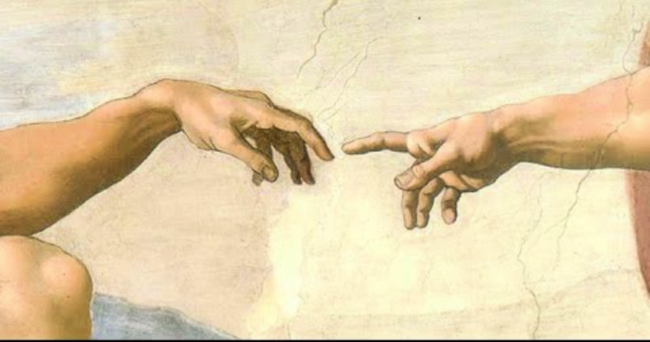
The Hebrews writer declared that under the new covenant it’s like getting a glimpse of heaven! With the new covenant believers encounter God. Mediated by the blood of Jesus and the indwelling Holy Spirit, Christians on the Earth share in worship with innumerable angels and the great assembly of those who have come before and died in faith and are already in God’s presence.

Continue reading

The Rest of the Story – Hebrews 4

“If Joshua gave the Israelites rest, God wouldn’t have spoken about another day later on. So you see that a sabbath rest is left open for God’s people. The one who entered God’s rest also rested from his works, just as God rested from his own. Therefore, let’s make every effort to enter that rest so that no one will fall by following the same example of disobedience, because God’s word is living, active, and sharper than any two-edged sword. It penetrates to the point that it separates the soul from the spirit and the joints from the marrow. It’s able to judge the heart’s thoughts and intentions. No creature is hidden from it, but rather everything is naked and exposed to the eyes of the one to whom we have to give an answer” (Hebrews 4:8-13, CSB).

The Hebrews writer gives us yet another Old Testament perspective of the Christian life. As we concluded in the previous post, our salvation in Christ and hope for eternal life is a reality that we should live out each day of our lives on earth.

In Hebrews 4 the Hebrews writer tells us that there is a “Rest” for God’s people to enter into. It has always been God’s plan since the Creation and still is today for His people to join Him in the restfulness of eternal life where God Himself abides (see vs. 1-4).

Continue reading

Running Out of Time – Hebrews 3:1-15

Watch out, brothers and sisters, so that there won’t be in any of you an evil, unbelieving heart that turns away from the living God. But encourage each other daily, while it is still called today, so that none of you is hardened by sin’s deception. For we have become participants in Christ if we hold firmly until the end the reality that we had at the start” (Hebrews 3:12-14, CSB).

Have you ever tried to imagine what life would be like without Time? It’s hard, if not impossible to imagine because our whole existence in this world is measured by Time: how old we are, what year it is, when we are born and when we die.

Everything we are and we do in this world is defined by the dimension of Time. Tomorrow becomes Today and then Today turns in to Yesterday. We progress through our lives from one element in time–an hour, a day, a week, a month, a year–to the next.

Continue reading

What’s In a Name? – Exodus 3

Then Moses asked God, “If I go to the Israelites and say to them: The God of your fathers has sent me to you and they ask me, ‘what is His name?’ what should I tell them?” God replied to Moses “I AM WHO I AM. This is what you are to say to the Israelites: I AM has sent me to you.” God also said to Moses, “Say this to the Israelites: Yahweh, the God of your fathers, the God of Abraham, the God of Isaac, and the God of Jacob, has sent me to you. This is My name forever; this is how I am to be remembered in every generation. (Exodus 3:13-15, CSB)

In Exodus 3 God commissioned Moses to lead the people out of 400 years of Egyptian slavery and revealed both His nature and His name to Moses on Mount Horeb. There is some significant wordplay at work in this revelation that is not so apparent in the English translation. Knowing a little of this Hebrew wordplay can certainly strengthen our understanding of God’s purpose in our lives and our world.

Continue reading

Glorified: Part 2 – John 17:1-5

Jesus spoke these things, looked up to heaven, and said, “Father, the hour has come. Glorify your Son so that the Son may glorify you, since you gave him authority over all people, so that he may give eternal life to everyone you have given him. This is eternal life: that they may know you, the only true God, and the one you have sent —Jesus Christ. I have glorified you on the earth by completing the work you gave me to do. Now, Father, glorify me in your presence with that glory I had with you before the world existed” (John 17:1-5, CSB).

The glorification of Jesus through His death on the cross and subsequent resurrection and ascension to be seated at the right hand of God forever is explained again in John 17. Jesus first framed His explanation of His glorification around the betrayal of Judas when the betrayal was exposed during the Last Supper as told in John 13.

After Jesus finished instructing His disciples at the last supper, Jesus then prayed for them. When Jesus prayed for His disciples, He didn’t mention the specifics of the events about to take place. But, He did indicate the result of what these events would produce—His and the Father’s glorification.

Continue reading

Glorified: Part 1 – John 13:1-34

When he had left, Jesus said, “Now the Son of Man is glorified, and God is glorified in him. If God is glorified in him, God will also glorify him in himself and will glorify him at once ” (John 13:31-32, CSB).

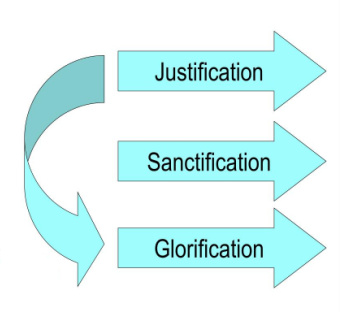
The three stages of Christian development and the doctrine of glorification are usually associated with the writings of Paul: “For those he foreknew he also predestined to be conformed to the image of his Son, so that he would be the firstborn among many brothers and sisters. And those he predestined, he also called; and those he called, he also justified; and those he justified, he also glorified” (Romans 8:29-30, CSB; see also 1 Corinthians 15:35-53; 2 Corinthians 3:18).

In the coherent parlance of a master storyteller, Jesus introduced His disciples to the intricate theological construct of glorification in the final hours before His arrest.

Continue reading

Dead Man Walking – John 11:1-44

After he said this, he shouted with a loud voice, “Lazarus, come out!” The dead man came out bound hand and foot with linen strips and with his face wrapped in a cloth. Jesus said to them, “Unwrap him and let him go” (John 11:43-44, CSB).

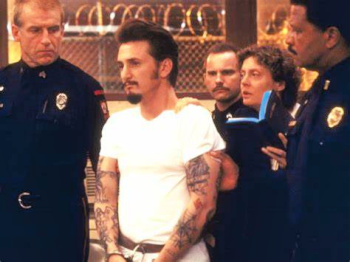
“Dead man walking” is an idiom used in U.S. prisons to announce a condemned prisoner being walked to the place of execution. The use of the phrase has expanded as a euphemism for anyone facing an impending and unavoidable loss.

But, when referring to Lazarus, dead man walking, is more of an axiom than an idiom. It’s not just a catchphrase but a fact! Lazarus was a man who literally died and was resurrected by Jesus and walked out of his tomb.

Lazarus was a bona fide dead man walking! But, he was not a man walking toward his death–he was a man walking away from his death!

Continue reading

Living Up – Philippians 3:12-21

“Only let us live up to what we have already attained. Join together in following my example, brothers and sisters, and just as you have us as a model, keep your eyes on those who live as we do” (Philippians 3:16-17, NIV).

In the 3rd chapter of his letter to the Philippians the Apostle Paul delineates two conflicting lifestyles. One lifestyle is characterized by having confidence in oneself and the material things of this world. Let’s call this living down.

The other lifestyle is characterized by faith in Christ and believing in His resurrection power. This lifestyle is characterized by living one’s life on this earth in preparation for the world to come. Let’s call this living up.

Continue reading

Untold Tenets: A Quick Look – John 3:1-21

“Just as Moses lifted up the snake in the wilderness, so the Son of Man must be lifted up, that everyone who believes may have eternal life in him” (John 3:14-15 NIV).

Untold Tenets is a series of devotions that captures its lessons from lesser-known and sometimes overlooked scriptures embedded within or immediately following a well-known bible story or biblical text.

John 3:1-21 records the well-known story of the conversation of Jesus with Nicodemus, a Pharisee and member of the Jewish ruling council. This story contains what are probably two of the most recognizable and often quoted verses in the New Testament: John 3:7 – “You must be born again” and John 3:16 – “For God so loved the world that he gave his one and only Son….”

Although the illustrious verses 3:7 and 3:16 usually draw most of the expository attention in the Nicodemus story, the more obscure verses 14 and 15 are actually the focus of this discussion. In these verses Jesus refers to an event in Numbers 21 in the Old Testament and uses it as a lead-in to His dramatic pronouncement in John 3:16.

Continue reading

End Game: Part 15, Eden Reopened – Revelation 21-22

Then I saw a new heaven and a new earth for the first heaven and the first earth had passed away and there was no longer any sea. I saw the Holy City, the new Jerusalem coming down out of heaven from God, prepared as a bride beautifully dressed for her husband.” (Revelation 21:1-2, NIV).

The beginning of Chapter 21 reveals the conclusion of the book of Revelation. God has accomplished His purpose in saving his people and this is the fitting consummation to the story of redemption: God has brought His people home and He will dwell with them. Look! God’s dwelling place is now among the people, and he will dwell with them. They will be his people, and God himself will be with them and be their God” (Revelation 21:3, NIV).

We have now arrived at the cosmic event that divides time and eternity–the point in time where heaven and earth conjoin to bind the future to the present.

Continue reading