

Don’t Give Up the Fight, Find Delight – Psalm 28

In Psalm 28, the psalmist, referring to wicked people, lamented: “They care nothing for what the Lord has done or for what his hands have made.” (vs. 28:3)

To the psalmist, the “wicked” were people who did not acknowledge God or obey His law. They did not discriminate between the sacred and the common, and therefore, had no respect for God’s authority, creation, law, or salvation.

The primary characteristic of the wicked was faithlessness–they had no belief or faith in God.

Sometimes God’s people can grow complacent in their faith and develop an attitude where they care little or nothing for what God has done or is doing.

Such ambivalence occurs when you let the circumstances of life cause you to lose focus on God and give up on the struggle to remain faithful.

But, if your faith grows cold, then you should ask God to restore joy and satisfaction in living for Him as the psalmist did: “The one thing I ask of the Lord—the thing I seek most—is to live in the house of the Lord all the days of my life, delighting in the Lord’s perfections and meditating in his Temple”(Psalm 27:4, NLT).

When you don’t care, don’t give up the fight…that’s when it’s time to find delight in God!

The psalmist encourages you, then, to wait on the Lord for restoration: “Wait patiently for the Lord. Be brave and courageous. Yes, wait patiently for the Lord” (Psalm 27:14, NLT).

When Jesus is the focus of your life and His Spirit is the guiding force of your life, then you will again find excitement and fulfillment in accomplishing His will and you will beseech God: “Teach me how to live, O Lord. Lead me along the right path” (Psalm 27:11, NLT).
Be a Blessing, Share the Gospel – Genesis 48:20

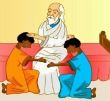
“So Jacob blessed the boys that day with this blessing: The people of Israel will use your names when they give a blessing” (Genesis 48:20, NLT)

Before Jacob (Israel) died, he blessed Joseph and his two sons, Manasseh and Ephraim.

First, he adopted Joseph’s sons, which entitled them to part of the inheritance of the promised land. Then he gave Ephraim, the younger of Joseph’s son, the right-hand blessing, which was the right to inheritance entitled to the eldest son.

Centuries later when God delivered the Israelites from Egyptian slavery and they possessed the land of Canaan, the tribes of Ephraim and Manasseh each received a portion of the land distribution.

Ephraim eventually became the leading tribe in the northern kingdom of Israel and the Old Testament prophets sometimes referred to the entire northern kingdom as Ephraim.

Blessing was used in the Old Testament to describe the conditions of covenantal relationships.

God, who is the ultimate Grantor of blessing, uses people to channel or convey His blessings. Thus, Abraham’s call by God to be a blessing was a missionary calling meant to convey God’s blessings to all the nations of the earth (Genesis 12:2-3).

When Jacob blessed Ephraim and Manesseh (and his other sons in vs. 49:3-28), he was conveying God’s blessing to the nation of Israel.

The nation of Israel, which was the successor to the Abrahamic covenant, was intended to be the channel for God’s blessing to all nations.

Declaring the gospel is the New Testament expression of the Old Testament blessing.

When Jesus commissioned His followers to go and make disciples of all nations (Matthew 28:18-20), theirs was a missionary calling under the new covenant.

Just as God called Abraham to be a blessing to all nations, Jesus called His disciples to be a blessing to all nations by proclaiming the gospel.

So, be a blessing, share the gospel!

“For I am not ashamed of this Good News about Christ. It is the power of God at work, saving everyone who believes—the Jew first and also the Gentile.” (Romans 1:16, NLT)

Finding God’s Will – Part 2: Why God Reveals His Will – Psalm 25:6-11

<< Part 1: Looking For God’s Will

“Remember, Lord, Your compassion and Your faithful love, for they have existed from antiquity. Do not remember the sins of my youth or my acts of rebellion; in keeping with Your faithful love, remember me because of Your goodness, Lord. The Lord is good and upright; therefore He shows sinners the way. He leads the humble in what is right and teaches them His way. All the Lord’s ways show faithful love and truth to those who keep His covenant and decrees. Because of Your name, Yahweh, forgive my sin, for it is great” (Psalm 25:6-11, HCSB).

The explanations the psalmist provides in Psalm 25 about how God reveals Himself and His will to us are so perceptive and penetrating that it merits another post to explain the reasons why God reveals His will.

Fortunately, Psalm 25 provides explanations for both How and Why!

In Part 1 we noted that how we look for God’s will is to turn to God, trust Him, and wait for Him.

And, we concluded that God reveals specific details of His character and His will to people who are desperately looking for Him. In other words, when we depend on God, then He will show us His way for us to follow.

But you might be left wondering why God would want to bother with providing a personal revelation of Himself to you and me?

Why go to all that trouble?

The psalmist provides a powerful theological explanation for God revealing Himself and His will to His people in these verses: God is good!

The psalmist contrasts the faithful love of God and His goodness with the depravity of human beings and their need for restoration.

The juxtaposition of remember/not remember/remember demonstrates that God’s consciousness (remembrance) of His own everlasting love and mercy is the reason He acts beneficently toward His people.

Therefore, people’s sins are forgiven (not remembered). And only then can God act on behalf of His people (remember) who have humbled themselves and depend on Him.

In fact, it is God’s reputation (His name) that is at stake in the forgiveness of people’s sins.

God’s reputation–His essential nature or character–is closely connected with His actions toward His people.

Because people are sinful and God is good, He must impute His goodness by forgiving our sins!  

It’s as if God is compelled by the force of His own nature to reveal Himself and His will to His people!  

“For it is God who is working in you, enabling you both to desire and to work out His good purpose” (Philippians 2:13).

Finding God’s Will – Part 1: Looking for God’s Will – Psalm 25:14

“The secret counsel of the Lord is for those who fear Him, and He reveals His covenant to them” (Psalm 25:14, HCSB).

Ostensibly, what most of us want to do most is God’s will!

While we have good intentions, we don’t really know how to go about doing God’s will–or at least put into practice the patience, perseverance, and obedience required to do it!

But for those really, really looking for God’s will, Psalm 25 provides some practical guidance and apt advice!

While the psalmist doesn’t furnish us with a formula or step-by-step methodology, he does identify a strategic approach to looking for God’s will based on reverence, adoration, and veneration for God.

The psalmist begins by advising us to turn to God, trust in God, and wait on God. When we turn to, trust in, and wait on God, then God will forgive our sins and teach us truth because of His faithful love for us (vs.4-7).

And God will reveal His will to us and definitely direct our lives when we realize our dependence on Him and seek His will penitently and humbly: “He shows sinners the way” (vs. 8) and “He leads the humble in what is right and teaches them His way” (vs. 9).

God’s way, His secret counsel, His will, is revealed to people who trust in Him and are faithful and obedient to Him.

Looking for God’s will is an act of worship by people who depend on God!

While God reveals Himself and His general will to us through His Word, the Bible, God makes it personal for us by revealing specific details of His will and attributes of His character that are appropriate to our need and situation.

So, if I were to pack into just one sentence what the psalmist is telling us about looking for God’s will, it would be this: God reveals His will to people who are desperate to know it!

My pastor says that unfortunately, the approach we more often use in looking for God’s will is: “I’m going to do this, this, and this and, by the way, God, will you bless it?”

But the psalmist reminds us that looking for God’s will is so critical that we must be willing to wait on God to reveal it to us.

And when God’s will is finally revealed to us, then God protects us with the assurance of doing the right thing and helps us remain in His will: “May integrity and what is right watch over me, for I wait for You” (vs. 21).

Just Do It – Matthew 25:40

“And the King will say, I tell you the truth, when you did it to one of the least of these my brothers and sisters, you were doing it to me” (Matthew 25:40, NLT).

In Matthew 25 Jesus told His disciples several object lessons when asked by them when the end of the world would come.

In one object lesson recorded in Matthew 25:31-46, Jesus referred to the time when He, the Coming King, will return to Earth to judge all nations.

Jesus told His disciples that on that judgement day, the King will separate all people into two groups in much the same way a shepherd separates sheep from goats.

He will reward those on his right with co-ownership of his Kingdom because during their lives on Earth they were benevolent toward other people in need. He will send those on his left into the eternal fire prepared for the devil and his angels because during their lives on Earth they were not benevolent toward other people in need.

So, the moral of the story was that you should help disenfranchised and desperate people because helping them is the same as helping the King, and not helping them is the same as not helping the King.

And, the message we should take from this somewhat ominous story is that serving God is not just a state of mind–it’s something you do!

Here’s what I mean…

The amazing thing about the righteous ones was that they didn’t know they were performing these good deeds or that they would receive a heavenly reward—they just did it because they were the loyal subjects of the King and wanted to please Him.

And the identifying characteristic of the unrighteous ones was that they just didn’t! They were repugnant to the King because they didn’t do anything to help those in need.

They were so self-referenced that they weren’t aware or didn’t care! And so they had no desire to serve or please the King.

So, this story mitigates some of the tension between faith and works because it illustrates that faith that does not result in works is not saving faith (James 2:14-26).

But those who focus on the reality of God’s invisible Kingdom by faith begin to live out their future life in the present by works without even knowing they are doing it—they just do it!

Running the Family Business – Matthew 25:29-30

“To those who use well what they are given, even more will be given, and they will have an abundance. But from those who do nothing, even what little they have will be taken away. Now throw this useless servant into outer darkness, where there will be weeping and gnashing of teeth.” (Matthew 25:29-30, NLT).

One of the parables Jesus told in response to questions from His disciples about the end of the world and when it will occur was about a man leaving on a journey who entrusted his business to his servants while he was gone.

He gave five bags of silver to one, two to another, and one to another, each according to his ability.

The servant with five bags of silver invested it and gained five more, the servant with two gained two more, but the servant with one hid it in a hole in the ground.

When the master returned and settled accounts with them, the servants receiving the five and two reported they gained the same amount back and the master rewarded them accordingly.

The servant burying his money returned it and the master rebuked him for not making any interest on his money and gave his one bag of silver to the servant with ten.

Jesus told this story as a warning to his disciples that they should be occupied with the business of advancing His Kingdom until He returns to claim it. But, in retelling this story, we commonly highlight the achievements of the faithful servants to the neglect of the unfaithful servant, who was really the focus of the story.

The parable reminds us that we must be good stewards of the gifts and abilities God gives us to advance His Kingdom.

In other words, we must be productive citizens of God’s Kingdom!

Now, if we interpret this parable to mean that the servants represent believers or disciples of Jesus, then the fate of the servant who received one bag of silver causes me some concern, even alarm!

It means that Jesus is essentially saying that whoever does not use their God-given gifts and abilities to be productive for the Kingdom of God will not only lose what God has given them, it will be given to productive citizens, and the unproductive ones will be cast aside or separated from God!

And, everyone who is productive will be given more, even to an abundance!

Depending on your theological position, either the unfaithful servant was never “saved” in the first place or he lost his “salvation” somewhere along the way because of his unfaithfulness.

Regardless of your theological point of view, you must conclude that this parable is a stern warning that a faithful servant must remain faithful to the end by remaining occupied with the business of advancing God’s Kingdom, be being productive for God’s Kingdom.

God has left the family business in our care. He expects us to run it for Him and be productive in running it until Jesus returns!

God’s Instruction Manual – Psalm 19:7-11

“The instructions of the Lord are perfect, reviving the soul” (Psalm 19:7-11, NLT)

In Psalm 19 David declared the eminence and significance of God’s law.

In general, God’s instructions refer to all His laws or commands but can specifically refer to Genesis through Deuteronomy, the written code given through Moses.

We should consider God’s instructions to be His complete revealed Word in the Bible, Old and New Testaments, Genesis through Revelation.

According to the psalmist, God’s instructions are relevant to your life because they are perfect, trustworthy, right, clear, true, fair, desirable, and sweet (vs. 7-10).

And, if you read God’s instruction manual, the psalmist says that these are some of the benefits you will receive from following its instructions:

  • make you wise beyond your own ability
  • bring joy and happiness to your life
  • describe how God wants you to live
  • warn about sin and disobedience to keep you on the right path
  • give satisfaction and fulfillment in this life and the life to come

We should value the Bible as God’s instruction manual for knowing and understanding Him and how He wants us to live and what He wants us to do with our lives.

Because if we want to obey God, it is necessary that we know what His instructions are and then follow them by applying them to our lives.

And, if you desire to live for God each day, then you need to consult God’s instruction manual, the Bible, each day.

End of Days – Mathew 24:1-28

“But the one who endures to the end will be delivered. This good news of the kingdom will be proclaimed in all the world as a testimony to all nations. And then the end will come.” (Mathew 24:13, HCSB).

In Matthew 24:1-28 Jesus described a number of signs and events including an increase in evil and great deception, wars, famines, natural disasters, persecution, false Christ’s, and astronomical disruption. that would precede His Second Coming and the end of world.

He also noted that the good news of His coming Kingdom would be preached to all nations.

Following the distress of the last days, Christ will return in power and glory in full view of all nations and He will gather all His people to Himself.

Many biblical scholars interpret these predictions of Jesus to have dual meanings, referring to both the destruction of the Jewish temple in Jerusalem and the Apocalypse.

Continue reading

Our Beautiful Inheritance – Psalm 16:5-6

“Lord, You are my portion and my cup of blessing; You hold my future. The boundary lines have fallen for me in pleasant places; indeed, I have a beautiful inheritance” (Psalm 16:5-6, HCSB)

These verses use language that is usually reserved for describing the land promised to Israel. Instead, the Psalmist proclaims that it is God Himself, not the land, that is the true inheritance.

This declaration is rather like the promise made to Aaron, the brother of Moses, and his progeny, the succession of high priests over Israel.

The priests had no inheritance of land in Israel!

Continue reading

God’s Plan: Your Success – Genesis 39:2, 21

“The Lord was with Joseph, so he succeeded in everything he did as he served in the home of his Egyptian master…But the Lord was with Joseph in the prison and showed him his faithful love” (Genesis 39:2, 21, NLT).

Joseph, the great-grandson of Abraham, often seemed to be a victim of his own success.

He was the favorite son of his father, Jacob, and so his brothers were jealous of him.

God chose him from among his eleven other brothers to be the salvation of Israel and gave him dreams and visions to confirm His promise.

But, when he told his brothers these dreams, they threw him in a dry well and then sold him into slavery.

Continue reading