Uncreation – Genesis 6:1 – 7:24

When the Lord saw that human wickedness was widespread on the earth and that every inclination of the human mind was nothing but evil all the time, the Lord regretted that he had made man on the earth, and he was deeply grieved. Then the Lord said, “I will wipe mankind, whom I created, off the face of the earth, together with the animals, creatures that crawl, and birds of the sky—for I regret that I made them.” Noah, however, found favor with the Lord (Genesis 6:5-8, CSB).

Sixteen hundred years after Adam and Eve’s initial act of corruption the moral and spiritual condition of humanity had declined to the extent that God was ready to destroy His creation–or at least the part of it that breathed.

But, to gain the full impact of the story of Noah’s ark, it is helpful to understand some of the wordplay between the creation story and the flood story.

Continue reading

Acceptable Worship – Genesis 4:1-15

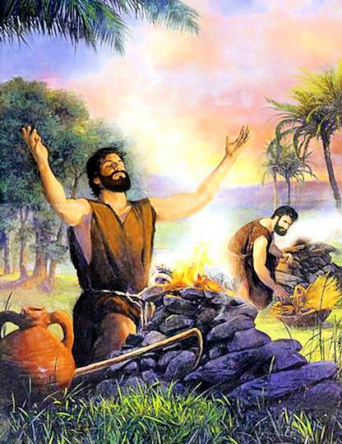
In the course of time Cain presented some of the land’s produce as an offering to the Lord. And Abel also presented an offering—some of the firstborn of his flock and their fat portions. The Lord had regard for Abel and his offering, but he did not have regard for Cain and his offering. Cain was furious, and he looked despondent (Genesis 4:3-5, CSB).

The story of the first murder is recorded only four chapters into the Bible. I am always intrigued by the incidents leading up to the murder. God’s regard for Abel’s offering of the firstborn of his flock and His disregard for Cain’s offering of some of the land’s produce creates a theological dilemma for me and seems to be the circumstance that sets in motion the tragic chain of events ending in murder.

Continue reading

Corrupted – Genesis 2:8 – 3:22

The Lord God planted a garden in Eden, in the east, and there he placed the man he had formed. The Lord God caused to grow out of the ground every tree pleasing in appearance and good for food, including the tree of life in the middle of the garden, as well as the tree of the knowledge of good and evil…. The Lord God took the man and placed him in the garden of Eden to work it and watch over it. And the Lord God commanded the man, “You are free to eat from any tree of the garden, but you must not eat from the tree of the knowledge of good and evil, for on the day you eat from it, you will certainly die” (Genesis 2:8-17, CSB).

Now the serpent was the most cunning of all the wild animals that the Lord God had made. He said to the woman, “Did God really say, ‘You can’t eat from any tree in the garden’?” The woman said to the serpent, “We may eat the fruit from the trees in the garden. But about the fruit of the tree in the middle of the garden, God said, ‘You must not eat it or touch it, or you will die.’” “No! You will certainly not die,” the serpent said to the woman. “In fact, God knows that when you eat it your eyes will be opened and you will be like God, knowing good and evil.(Genesis 3:1-5, CSB).

In these two chapters from Genesis we see the formulation of some fundamental components of the Judeo-Christian ethic–free will, human depravity, moral law and justice.

God planted a garden in Eden and gave the man the responsibility for working in the garden and watching over it. (Why it was necessary for the man to protect the garden is an interesting question for another time.) Two species of trees in the garden are mentioned–the tree of life and the tree of the knowledge of good and evil. Of the former, Adam and Eve could eat and subsequently experience eternal life. Of the latter, they were commanded not to eat or they would experience death.

Continue reading

The Good, The Very Good and The Not So Good – Genesis 2:4-25

And God saw that it was good….And God saw that it was good…. And God saw that it was good…. God saw all that He had made, and it was very good…. Then the Lord God said, “It is not good for man to be alone” (Genesis 1:18, 21, 25, 31, 2:18, CSB).

Seven times in Genesis 1, God observed His creation to be good. In Genesis 1:4 after He had spoken light into existence, God declared it to be good. In vs. 1:10 after separating the water from the land, God called that good. After creating plant life in vs. 1:12 God saw that it was good. In vs. 1:18 after setting the solar system in place and spinning the earth on its axis to create seasons and night and day, God calls that good. In vs. 1:21 after creating animals to populate the water and the air, God determined that to be good. In vs. 1:25 after populating the land with animals and insects, God calls that good as well.

Then, after creating humanity as the capstone of His creation (vs. 1:26–30), God observed all He had made and declared it to be not just good but very good.

Continue reading

Peace on Earth, Good Will Toward Men – Luke 2:8-20

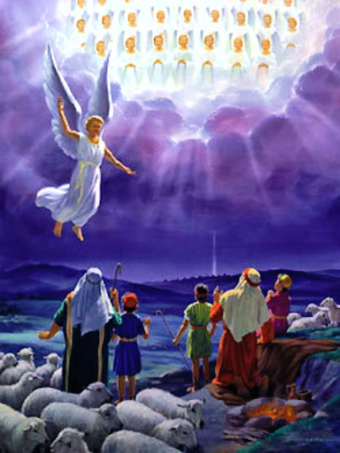
And suddenly there was with the angel a multitude of the heavenly host praising God and saying:
“Glory to God in the highest,
And on earth peace, goodwill toward men!”
(Luke 2:13-14, NKJV)

We often sing or say or write this angelic announcement of the Incarnation in our Christmas songs and greetings as if the angels declared the birth of the Messiah brought new conditions to the earth–peace and good will.

We think of “peace” as meaning nations not at war with one another and “good will” as people being kind to one another. Yet we know that on earth nations are at war with one another and human beings showing kindness to other human beings is often lacking.

Continue reading

The Popeye Principle – 2 Kings 17

The king of Assyria invaded the entire land, marched against Samaria and laid siege to it for three years. In the ninth year of Hoshea, the king of Assyria captured Samaria and deported the Israelites to Assyria…. All this took place because the Israelites had sinned against the Lord their God” (2 Kings 17: 5-7, NIV).

When I was a little boy I used to watch a cartoon on television called Popeye the Sailor. Popeye was a one-eyed mariner outfitted in a sailor cap and pipe. Most observably, he had over-developed forearms and under-developed biceps. Popeye also had a skinny girlfriend named Olive Oil who was much taller than he and a nemesis named Brutus who was a big muscular brute as his name suggested.

The theme of each Popeye episode was essentially the same. Brutus would beat up Popeye and steal Olive away. When Popeye became fed up with Brutus’ brutality, he would exclaim, “That’s all I can stands, I can’t stands no more” and reach into his shirt and pull out a can of spinach!

Popeye would squeeze the contents of the can of spinach into his mouth, which would cause Popeye’s scrawny biceps to expand into powerful, muscular arms. Then, He would deliver a blow to Brutus that sent him soaring off into the distance. And, Popeye would reclaim Olive as his girl.

In 722 BCE, some ten to twenty years after the Assyrians had invaded Israel and begun deporting the Israelites, the capital city of the northern kingdom of Israel, Samaria, was finally seized by Sargon II, ruler of Assyria, after a three-year siege started by Shalmaneser V, his predecessor. This is the event these verses from 2 Kings 17 are referencing.

Continue reading

Emptying (The Humiliation of God) – Philippians 2:5-12

Adopt the same attitude as that of Christ Jesus, who, existing in the form of God,did not consider equality with God as something to be exploited. Instead he emptied himself by assuming the form of a servant, taking on the likeness of humanity. And when he had come as a man, he humbled himself by becoming obedient to the point of death—even to death on a cross. For this reason God highly exalted him and gave him the name that is above every name, so that at the name of Jesus every knee will bow—in heaven and on earth and under the earth—and every tongue will confess that Jesus Christ is Lord, to the glory of God the Father. Therefore, my dear friends, just as you have always obeyed, so now, not only in my presence but even more in my absence, work out your own salvation with fear and trembling” (Philippians 2:5-12, CSV).

There’s some difficult yet beautiful theology embedded between the first and last verses of this passage that describe a fundamental element of the Christian lifestyle.

Because of the rhythmic character of the words in vs. 6-11, these verses are considered to be the lyrics from an early Christian hymn. That Jesus “emptied” Himself is a phrase much debated by theologians and prompting various theories of what aspects of deity Jesus gave up through His incarnation.

We may not know the extent of the divine attributes Jesus emptied Himself of by leaving heaven to come to earth, but the end result of this “emptying” was a sort of divine humiliation. And, in Jesus’ case, the scope of the humiliation–from God to human, from heaven to earth–is beyond our perception.

Continue reading

What a Friend We Have in Jesus – John 21:15-19

When they had eaten breakfast, Jesus asked Simon Peter, “Simon, son of John, do you love me more than these?” “Yes, Lord,” he said to him, “you know that I love you.” “Feed my lambs,” he told him. A second time he asked him, “Simon, son of John, do you love me?” “Yes, Lord,” he said to him, “you know that I love you.” “Shepherd my sheep,” he told him. He asked him the third time, “Simon, son of John, do you love me?” Peter was grieved that he asked him the third time, “Do you love me?” He said, “Lord, you know everything; you know that I love you.” “Feed my sheep,” Jesus said. “Truly I tell you, when you were younger, you would tie your belt and walk wherever you wanted. But when you grow old, you will stretch out your hands and someone else will tie you and carry you where you don’t want to go.” He said this to indicate by what kind of death Peter would glorify God. After saying this, he told him, “Follow me.” (John 21:15-19, CSB).

John 21 reads like an epilogue to his book. John’s gospel seems to end in Chapter 20 with the last statement concluding that his purpose for telling this story was so its readers might believe that Jesus was the Messiah and receive eternal life (vs. 31).

The appearance of Jesus to His disciples by the Sea of Galilee that John described in Chapter 21 provides an interesting twist to the resurrection and ascension story. It portrays Jesus in a different light from the Resurrected Christ.

Continue reading

The Scarred God – John 20:24-29

Then he said to Thomas, “Put your finger here and look at my hands. Reach out your hand and put it into my side. Don’t be faithless, but believe.” Thomas responded to him, “My Lord and my God! Jesus said, “Because you have seen me, you have believed. Blessed are those who have not seen and yet believe.” (John 20:27-29, CSB)

NOTE: In the title of this post don’t misread “Scarred” meaning disfigured as “Scared” meaning afraid.

Did you know that Jesus was talking about you when He spoke these words to Thomas during one of His appearances to His disciples after His resurrection?

Christians today face a dilemma they have faced since Jesus made this statement to Thomas—that of living in that period in time after Christ’s first coming and before His second coming.

Some theologians have called the age in which we live “between the times,” meaning the period of time between Christ’s first and second comings.

While the first generation of Christians was closely connected to Christ’s first coming, all Christians since have had to address the ambiguity of the time between His first and second comings.

Continue reading

The Greater Sin- John 19:1-24

When Pilate heard this statement, he was more afraid than ever. He went back into the headquarters and asked Jesus, “Where are you from?” But Jesus did not give him an answer. So Pilate said to him, “Do you refuse to speak to me? Don’t you know that I have the authority to release you and the authority to crucify you?” “You would have no authority over me at all,” Jesus answered him, “if it hadn’t been given you from above. This is why the one who handed me over to you has the greater sin.” (John 19:8-11, CSB).

Every state classifies crimes into distinct categories. The categories are usually felony, misdemeanor, and infraction. The determination of the crime category is based on the severity of the crime.

It’s the same with sin. According to Jesus some sins are greater than others.

These verses are part of John’s account of the trial of Jesus before Pontius Pilate, the Roman governor of Judea. Pilate questioned Jesus about His religious authority and the charges brought against him by the Jewish religious leaders. John noted that Pilate was fearful when the Jewish religious leaders testified that Jesus “made himself the Son of God” (vs. 7).

Continue reading