Jumping Upside Down – Luke 17:33; 18:14

girl-jumping-upside-down“If you cling to your life, you will lose it, and if you let your life go, you will save it…For those who exalt themselves will be humbled, and those who humble themselves will be exalted.” (Luke 17:33; 18:14, NLT).

In Luke 17 Jesus told His disciples about His second coming to earth and how those that try to hold on to their life in this world will lose it in the end.

In Luke 18 Jesus told the story of a Pharisee who prayed he was thankful he was not sinful like other men, while a certain tax collector prayed and called on God to have mercy on him as a sinner. Jesus exposes the prayer of the Pharisee as self-exalting.

Continue reading

Today! – Deuteronomy 27:9-10

Today_Logo“O Israel, be quiet and listen! Today you have become the people of the Lord your God. So you must obey the Lord your God by keeping all these commands and decrees that I am giving you today” (Deuteronomy 27:9-10, NLT).

Israel was preparing to enter the promised land when Moses made this declaration to the Israelites.

Although the Israelites were already God’s people, each time they affirmed themselves to be God’s people and renewed the covenant with God, they became God’s people in a fresh, new way!

Continue reading

Death Wish – Ecclesiastes 7:2-4

thinkingaboutdeath“A good reputation is more valuable than costly perfume. And the day you die is better than the day you are born. Better to spend your time at funerals than at parties. After all, everyone dies—so the living should take this to heart. Sorrow is better than laughter, for sadness has a refining influence on us. A wise person thinks a lot about death, while a fool thinks only about having a good time” (Ecclesiastes 7:2-4, NLT).

The Teacher had a good understanding about human nature when he penned these words in the book of Ecclesiastes.

Continue reading

Death Benefit – Psalm 116:15

Grim_Reaper“The death of His faithful ones is valuable in the Lord’s sight” (Psalm 116:15, HCSB).

We don’t like to think about death and dying and so we really don’t give it much thought…until we have to!

Death is an uncomfortable subject to discuss, and when we talk about it, we commonly use terms like “tragic” or “untimely,” which gives death an undeserved negative connotation.

To us, death is the Grim Reaper!

Continue reading

Two Choices – Proverbs 18:10-11

two_choices“The name of Yahweh is a strong tower; the righteous run to it and are protected. A rich man’s wealth is his fortified city; in his imagination it is like a high wall”  (Proverbs 18:10-11, HCSB).

At first glance, you may read these consecutive verses as two individual proverbs, each having its own meaning. Upon a closer look you will see that these two proverbs are like two sides of the same coin:
two worldviews,
two ways of life,
two realities,
two choices for life!

Continue reading

The Good Thing About Death – Psalm 116:15

eternal-life-road-sign“The death of His faithful ones is valuable in the Lord’s sight” (Psalm 116:15, HCSB).

While Easter is the time we celebrate the Lord’s resurrection, we are also reminded that just as Jesus died and was resurrected, the only way human beings enter into eternal life is through the death of the physical body.

The Apostle Paul said, “What you sow does not come to life unless it dies” (I Corinthians 15:36).

Now, maybe it sounds morbid to say that death is the way to eternal life, but the fact is, you have to die to live eternally. As human beings, we strive for eternal life and death and resurrection are the means through which we enter into eternal life.

Continue reading

What? – Exodus 15:15, 31-32

“When the Israelites saw it, they asked one another, ‘What is it?’ because they didn’t know what it was. Moses told them, ‘It is the bread the Lord has given you to eat’… The house of Israel named the substance manna. It resembled coriander seed, was white, and tasted like wafers made with honey.” (Exodus 15:15,31-32, HCSB)

The word manna is the anglicized form of the Hebrew word man, which is the interrogative “What?”

God sent manna in response to the Israelites complaining that began not long after escaping from Egyptian bondage. The Israelites complained that in Egypt they had all the bread they wanted (vs. 3).


God continued sending manna and Israel continued eating it for forty years until the day following the first day they ate food grown in the promised land (vs 36; Joshua 5:12).

“What?” was probably a pretty good name for manna because no naturally occurring substance matches the description, constancy, and duration of manna well enough to account for it other than as a supernatural phenomenon.

During the earthly ministry of Jesus the Jews were still questioning “What?” and alluded to manna and these verses when they asked Jesus what sign He would show them to prove He was the Messiah. (John 6:30-31).

Jesus reminded them that it wasn’t Moses but God who gave the Israelites the manna and that manna typified the giving of eternal life.

In contrast to the manna, which lasted only during the Israelites’ forty-year wilderness wandering, Jesus said He was the real Bread of Life because He gives eternal life to those who believe and follow after Him!

Jesus is the answer to our “What?” He will save us and provide His loving care to us, not just for a while, but for all the days of our life on this earth and for eternity!

“For this is the will of My Father: that everyone who sees the Son and believes in Him may have eternal life, and I will raise him up on the last day” (John 6:60, HCSB).

When Futility Gives Way To Hope – Psalm 39:6-7

“Certainly, man walks about like a mere shadow. Indeed, they frantically rush around in vain, gathering possessions without knowing who will get them. Now, Lord, what do I wait for? My hope is in You” (Psalm 39:6-7, HCSB).

The psalmist realized that in the grand scheme of things his life was fleeting and short-lived, like a vapor or shadow.

People try to find meaning for their lives by gathering possessions as if more stuff will give more significance to their lives.

But, all our accomplishments, all our wealth, all our possessions fade away and are forgotten over time.

If our life in this world is to have any meaning, it must be that it is a preparation for eternal life.

For when we trust in God, we are trusting in God for eternal life.

And, if there’s nothing more than the span of our life on Earth, then our lives are lived in futility and our whole existence is meaningless.

But, when we trust in God, futility gives way to hope. And hope gives our lives meaning.

For those whose hope and trust is in God, life is meaningful and significant because it is not tied to earthly achievements but rather to a heavenly existence!

“Don’t collect for yourselves treasures on earth, where moth and rust destroy and where thieves break in and steal. But collect for yourselves treasures in heaven, where neither moth nor rust destroys, and where thieves don’t break in and steal. For where your treasure is, there your heart will be also” (Matthew 6:19-21, HCSB).

Just Do It – Matthew 25:40

“And the King will say, I tell you the truth, when you did it to one of the least of these my brothers and sisters, you were doing it to me” (Matthew 25:40, NLT).

In Matthew 25 Jesus told His disciples several object lessons when asked by them when the end of the world would come.

In one object lesson recorded in Matthew 25:31-46, Jesus referred to the time when He, the Coming King, will return to Earth to judge all nations.

Jesus told His disciples that on that judgement day, the King will separate all people into two groups in much the same way a shepherd separates sheep from goats.

He will reward those on his right with co-ownership of his Kingdom because during their lives on Earth they were benevolent toward other people in need. He will send those on his left into the eternal fire prepared for the devil and his angels because during their lives on Earth they were not benevolent toward other people in need.

So, the moral of the story was that you should help disenfranchised and desperate people because helping them is the same as helping the King, and not helping them is the same as not helping the King.

And, the message we should take from this somewhat ominous story is that serving God is not just a state of mind–it’s something you do!

Here’s what I mean…

The amazing thing about the righteous ones was that they didn’t know they were performing these good deeds or that they would receive a heavenly reward—they just did it because they were the loyal subjects of the King and wanted to please Him.

And the identifying characteristic of the unrighteous ones was that they just didn’t! They were repugnant to the King because they didn’t do anything to help those in need.

They were so self-referenced that they weren’t aware or didn’t care! And so they had no desire to serve or please the King.

So, this story mitigates some of the tension between faith and works because it illustrates that faith that does not result in works is not saving faith (James 2:14-26).

But those who focus on the reality of God’s invisible Kingdom by faith begin to live out their future life in the present by works without even knowing they are doing it—they just do it!

End of Days – Mathew 24:1-28

“But the one who endures to the end will be delivered. This good news of the kingdom will be proclaimed in all the world as a testimony to all nations. And then the end will come.” (Mathew 24:13, HCSB).

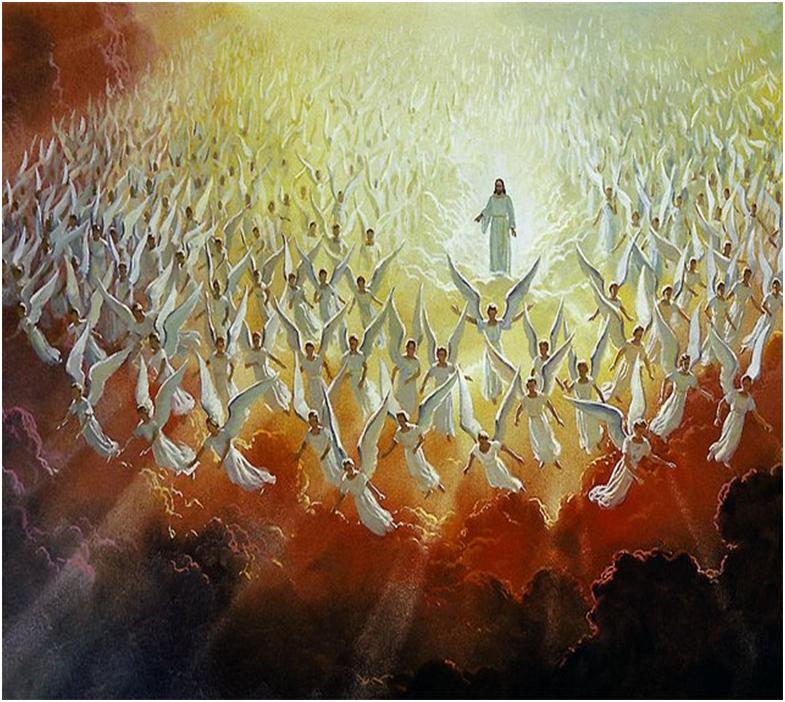
In Matthew 24:1-28 Jesus described a number of signs and events including an increase in evil and great deception, wars, famines, natural disasters, persecution, false Christ’s, and astronomical disruption. that would precede His Second Coming and the end of world.

He also noted that the good news of His coming Kingdom would be preached to all nations.

Following the distress of the last days, Christ will return in power and glory in full view of all nations and He will gather all His people to Himself.

Many biblical scholars interpret these predictions of Jesus to have dual meanings, referring to both the destruction of the Jewish temple in Jerusalem and the Apocalypse.

Continue reading