Then the Lord came down to look over the city and the tower that the humans were building. The Lord said, “If they have begun to do this as one people all having the same language, then nothing they plan to do will be impossible for them. Come, let’s go down there and confuse their language so that they will not understand one another’s speech.” So from there the Lord scattered them throughout the earth, and they stopped building the city. Therefore it is called Babylon, for there the Lord confused the language of the whole earth, and from there the Lord scattered them throughout the earth (Genesis 11:5-9, CSB).
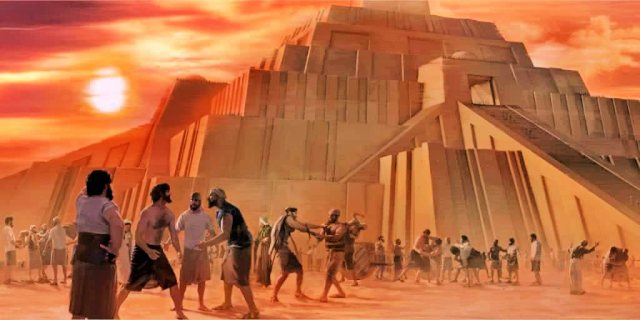
The tower of Babel was probably a ziggurat, which was a common archaeological structure in ancient Mesopotamian cities. Archaelogists have unearthed dozens of ziggurats in the region, the most famous being the Great Ziggurat of Ur in Iraq. It is a huge, 4,100 year old structure made up of more than 700,000 baked bricks.
Ziggurats, unlike the pyramids in Egypt that were tombs for pharaohs, were stairways for the gods. The defining structure of a ziggurat was a long stairway leading to the top where a room with a bed and table was prepared for the deity. The stairway was not for people to climb up, but for the god to come down.
In these verses God “came down” to look over the city and the tower the people were building up to heaven. But, God didn’t need to be invited or enticed to come down from heaven to the earth nor did He need to descend a stairway to facilitate His descent.
Continue reading →









 Steve's Bible Meditations