
No Membership Requirements – Acts 14:26 – 15:35

Originally published March 9, 2011.

“For it was the Holy Spirit’s decision—and ours—not to place further burdens on you beyond these requirements: that you abstain from food offered to idols, from blood, from eating anything that has been strangled, and from sexual immorality. You will do well if you keep yourselves from these things” (Acts 15:28-29, CSB).

After arriving back in Antioch after their first missionary journey, Paul and Barnabas reported to the church that God “had opened the door of faith to the Gentiles” (vs. 14:27) in Asia. But some men came to Antioch from Jerusalem teaching that unless you are circumcised you “cannot be saved” (vs. 15:1).

Paul and Barnabas debated with these men about this doctrine and were unable to reach an understanding with them. So, the Antioch church sent Paul and Barnabas to Jerusalem to discuss the issue with the apostles and elders there. At this time the Jerusalem church was considered the headquarters of the Christian movement.

Continue reading

Leftover Grace – Genesis 21:1-21

But God said to Abraham, “Do not be distressed about the boy and about your slave. Whatever Sarah says to you, listen to her, because your offspring will be traced through Isaac, and I will also make a nation of the slave’s son because he is your offspring” (Genesis 21:12-13, CSB).

In Genesis 15 God made a covenant with a childless and aged Abraham that his offspring would be so numerous they would become a great nation and that he would possess the land of Canaan, “the promised land.”

So, Sarah gave her Egyptian slave Hagar to Abraham to take as his wife as a way to fulfill God’s promise to them. Abraham had a child by Hagar named Ishmael.

Then, fourteen years later God fulfilled His promise to Abraham and Sarah became pregnant and bore Abraham a son named Isaac. While both boys were Abraham’s sons, Isaac was the son of God’s promise while Ismael was the son that Sarah and Abraham contrived to fulfill God’s promise.

Continue reading

Leftovers – Matthew 16:1-12

“Don’t you remember the five loaves for the five thousand, and how many basketfuls you gathered? Or the seven loaves for the four thousand, and how many basketfuls you gathered? How is it you don’t understand that I was not talking to you about bread?'” (Matthew 16:9-11, NIV).

When I was a kid my dad was a school teacher and since school teachers didn’t make very much money, my mom also worked to supplement our family income.

In the summer when school wasn’t in session my dad was a stay-at-home parent and it fell to him to fix lunch each day. He would always gather the leftovers from various, unrelated meals and warm them up for our lunch. Oh, how I loathed leftovers!

Perhaps the disciples felt the same way about leftovers in this story from Matthew 16 when they forgot to take food with them on their boat trip across the Sea of Galilee.

Continue reading

What Is God Like? Forever Favor – Psalm 30:4-5

“Sing the praises of the Lord, you his faithful people; praise his holy name. For his anger lasts only a moment, but his favor lasts a lifetime; weeping may stay for the night, but rejoicing comes in the morning” (Psalm 30:4-5, NIV).

A question I ask myself when I read a Bible verse or passage is: “What do these verses tell me about what God is like?” While no verses in the Bible contain a complete description of God,  many verses and statements in the Bible reveal character traits of God.

This jubilant psalm of praise reveals an interesting attribute of God’s personality:

God’s anger is momentary but His mercy is eternal!

What if it was the other way around–God’s anger is forever and His mercy is momentary? The reason I ask is because that’s often what we think. We think God is angry with the human race and the world He created and occasionally He gets over it and blesses us and then quickly reverts to His anger mode.

Continue reading

God’s Favorite Child – Ephesians 1:5-7

Favorite-ChildHe predestined us to be adopted through Jesus Christ for Himself, according to His favor and will, to the praise of His glorious grace that He favored us with in the Beloved. We have redemption in Him through His blood, the forgiveness of our trespasses, according to the riches of His grace”  (Ephesians 1:5-7, HCSB).

I have two brothers and a sister. Growing up, my mother sometimes told me that I was her smartest and best-looking son and that I was her favorite. I must have believed her because I still think I’m smarter and better looking than my two brothers!

Continue reading

Waiting for Grace – Isaiah 30:18

alone-with-god“Therefore the Lord longs to be gracious to you, and therefore He waits on high to have compassion on you. For the Lord is a God of justice; how blessed are all those who long for Him” (Isaiah 30:18, NASB).

Notice the amazing logic of grace that is explained in this verse:

  1. God’s people have forsaken Him for a false salvation (vs. 1–17).
  2. God is gracious to them, but He waits for just the right time to extend His grace.
  3. Because He is the God of justice, He knows the perfect way to achieve his purpose and  the perfect time to take action.
  4. Then, those who wait on God to extend His grace and mercy will certainly receive it and be restored.

Continue reading

Entitled! – Luke 20:9-19

entitlement_seagullsWhat, then, will the owner of the vineyard do to them? He will come and destroy these vine-growers and will give the vineyard to others” (Luke 20:15-16, NASB).

Jesus told a parable of a man who planted a vineyard and then leased it to tenants to work it for him. After a while the owner of the vineyard sent servants to the tenants to collect a portion of the fruit in payment on the lease, but the tenants beat the servants and sent them away without payment. Finally, the owner sent his son thinking the tenants would respect him. Instead, they killed him because he was the heir and they wanted to inherit the vineyard for themselves.

In these verses Jesus asked those listening how the owner should resolve his problem and then answered His own question: he would destroy the tenants and give the vineyard to others!  The meaning of the parable was obvious to those who heard it–the owner of the vineyard was God and the tenants were the priests and scribes, the spiritual leaders of the Jews (vs. 19).

But, the meaning of the parable should not be lost on those of us today who are stewards of God’s grace–individually or collectively. When we get so focused on our own good works and neglect the One  we are working for, we can develop a false sense of entitlement like the wicked tenants who claimed ownership of the vineyard and all they produced from it.

Continue reading

Where Is God Leading You? – Exodus 33:12-34:9

GodPassingByMoses“For how then can it be known that I have found favor in Your sight, I and Your people? Is it not by Your going with us, so that we, I and Your people, may be distinguished from all the other people who are upon the face of the earth?” (Exodus 33:16, NASB).

These are the words Moses spoke to God when he interceded for the Israelites after they had crafted a golden calf to worship while Moses was on Mt. Sinai for forty days receiving the Ten Commandments and other instructions from God. So, God threatened to send the Israelites into the promised land with only an angel to lead them and without His presence among them.

Continue reading

Grace/Not Grace – Exodus 15:19

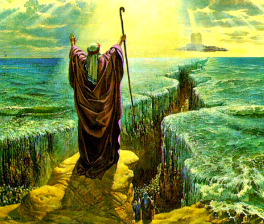
moses-parting-the-red-sea“For the horses of Pharaoh with his chariots and his horsemen went into the sea, and the Lord brought back the waters of the sea on them, but the sons of Israel walked on dry land through the midst of the sea” (Exodus 15:19, NASB).

You might notice in this verse from the Song of Moses, which proclaims God’s greatness in helping Israel escape from Egypt, that the same miracle that God used to deliver the Israelites is also the same miracle that God used to destroy Pharaoh’s army!

Continue reading

The Gospel According to John 3:16

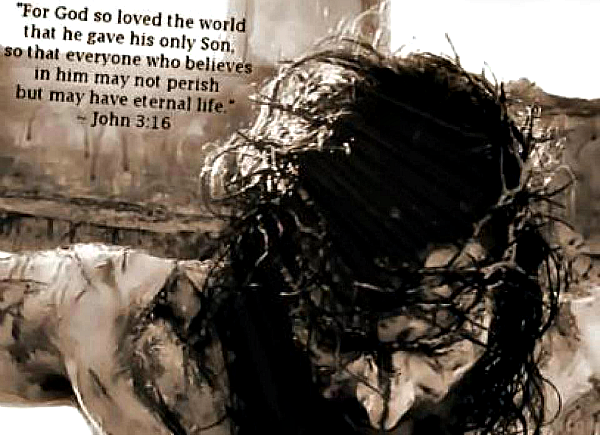
ForGodSoLoved-JesusOnCross

The way we sometimes present the gospel would make this verse read more like this: “For we sinned so much that God gave His only begotten Son, that whoever believes in Him will quit sinning.”

We make the gospel out to be about our sin rather than God’s love. We send people down the Roman Road–“all have sinned” (Romans 3:23)–instead of up the Via Dolorosa–“He gave His only begotten Son” (John 3:16).

Continue reading