The Nicodemus Dilemma – John 3:1-21

“How can these things be?” asked Nicodemus (John 3:9, CSB).

During the twilight discussion between Jesus and Nicodemus, an iconic declaration is spoken by Jesus that is often included in tracts, sermons and Sunday School lessons: John 3:3: “Unless someone is born again he cannot see the kingdom of God.”

But little is discussed of Nicodemus’ side of the conversation and what he said to prompt Jesus to make this momentous pronouncement.

John indicates that Jesus went to Jerusalem for the Passover Festival at the beginning of his ministry. During the Passover Festival Jesus drove the money changers from the Temple and performed many miracles. As a result of the miracles many people in Jerusalem believed that Jesus was the Messiah (see John 2:13-25).

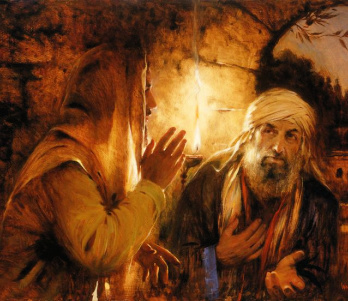
Probably during this Passover Festival in Jerusalem Nicodemus held his meeting with Jesus. Nicodemus was a Pharisee and ruler of the Jews and came to Jesus at night. Maybe Nicodemus was trying to avoid public scrutiny because of his religious and political position or he wanted to have a one-on-one conversation with Jesus when there weren’t crowds surrounding Jesus.

Having witnessed Jesus’ ministry in Jerusalem, Nicodemus apparently felt a disconnect between his religious understanding and what he observed in the ministry of Jesus at Jerusalem. Nicodemus’ dilemma is apparent in the questions he asked Jesus during their discussion.

To begin the conversation, it appears that Nicodemus wanted verification of Jesus’ calling. So, Nicodemus injected an offhanded question about His authenticity into a polite acknowledgement of His ministry. First, Nicodemus said, “Rabbi, we know that you are a teacher who has come from God, for no one could perform these signs you do unless God were with him.” (vs. 2).

Nicodemus’ probably expected Jesus to affirm that He was, indeed, sent from God. But Jesus skipped over the small talk and took aim at the question that was really bothering Nicodemus–how to enter the kingdom of God. Today we might ask, “How do I get saved?”

Jesus turned the conversation into a theological challenge to Nicodemus’ rather than a debate over His divinity. Jesus did this by making the outrageous pronouncement, “Unless someone is born again (or born from above), he cannot see the kingdom of God.”

When confronted with this incredible and even bizarre declaration of Jesus, a bewildered Nicodemus responded to Jesus with as ridiculous an assertion as he thought Jesus was making to him: “How can anyone be born when he is old?” …. “Can he enter his mother’s womb a second time and be born?” (vs. 4).

Nicodemus’ reaction was certainly one I can relate to as a fellow inhabitant of this world when confronted with the other-wordly declarations and supernatural actions of Jesus!

Fortunately, Jesus explained to Nicodemus exactly what He meant by being born again. “Jesus answered, “Truly I tell you, unless someone is born of water and the Spirit, he cannot enter the kingdom of God” ( vs. 5).

Unfortunately, His explanation ran contrary to Nicodemus’ existing religious perceptions. Nicodemus then articulated his dilemma and the dilemma of many of us who think we’ve got God all figured out and neatly stored away in our religious beliefs box.

“How can these things be?” (vs. 9).

We have all experienced the Nicodemus dilemma because it’s the human dilemma. When confronted with the reality of God’s Kingdom, it challenges the reality I experience in this world.

Jesus’ teachings (and His life, death and resurrection) subvert our closely-held and common beliefs about what it takes to obtain eternal life. Like Nicodemus, I might think that if I’m a good person, if I follow the rules, or if I do more good than bad in my life then God will accept me in because I’m one of the good (religious) guys.

But, that’s not what Jesus said–at all! Jesus said that entering the Kingdom of God is supernaturally-enabled!

Jesus stipulated that human beings must have a spiritual re-birth to make it into heaven. If you are a human being, you have been born once (of water). But, to enter the Kingdom of God you must be born a second time by/of the Spirit of God.

Being born again means entering into an eternal relationship with God through Jesus Christ and enabled by the Holy Spirit.

It’s just that simple….and profound!

For God loved the world in this way: He gave his one and only Son, so that everyone who believes in him will not perish but have eternal life. (John 3:16, CSB)

Mixed Metaphors – John 10:1-18

Jesus said again, “Truly I tell you, I am the gate for the sheep. All who came before me are thieves and robbers, but the sheep didn’t listen to them…. I am the good shepherd. The good shepherd lays down his life for the sheep. The hired hand, since he is not the shepherd and doesn’t own the sheep, leaves them and runs away when he sees a wolf coming…. “ (John 10:7-12, CSB)

When we read John 10 it almost seems like Jesus is mixing His metaphors. First, He says He is the gate for the sheep. Next, He says He is the good shepherd. Then, He says He is not the hired hand that looks after the sheep.

Throughout the Gospel of John Jesus portrayed Himself and His ministry with a number of analogies:

  • I am the bread of life” (John 6:35).
  • “I am the light of the world” (John 8:12; 9:5).
  • “I am the resurrection and the life” (John 11:25).
  • “I am the way, the truth, and the life” (John 14:6).
  • “I am the true vine” (John 15:1, 5).
  • “I tell you the truth, before Abraham was born, I am!” (John 8:58). While not an analogy, it is a play on words that the Jews clearly understood in which Jesus equates Himself with the “I AM” title God gave Himself in Exodus 3:14.
Continue reading

Qualified for Membership – Acts 11:15-18

membershipcard“As I began to speak, the Holy Spirit came down on them, just as on us at the beginning. Then I remembered the word of the Lord, how He said, ‘John baptized with water, but you will be baptized with the Holy Spirit. Therefore, if God gave them the same gift that He also gave to us when we believed on the Lord Jesus Christ, how could I possibly hinder God? When they heard this they became silent. Then they glorified God, saying, ‘So God has granted repentance resulting in life even to the Gentiles!'” (Acts 11:15-18, HCSB).

Citizenship is generally a function of where you are born. You are a citizen of the country in which you are geographically born or of which your parents are a citizen.

The same is true for citizenship in the Kingdom of God. Kingdom citizens must be born of God; they must be birthed by the Holy Spirit.

Continue reading

Resurrection! Part 1: Pain Relief – John 11:1-16

pain_relief“When Jesus heard it he said, ‘This sickness will not end in death but is for the glory of God, so that the Son of God may be glorified through it'” (John 11:4, HCSB).

This meditation is Part 1 of a four-part series from the story of the raising of Lazarus from death.  In this opening part of the story of Lazarus, Jesus received a message from Lazarus’ sisters, Mary and Martha, that their brother (and Jesus’ dear friend) was on his deathbed. They wanted Jesus to come and heal Lazarus so he wouldn’t die.

Continue reading

The “Real” Jesus – John 3:1-4

RealJesus“There was a man named Nicodemus, a Jewish religious leader who was a Pharisee. After dark one evening, he came to speak with Jesus. ‘Rabbi,’ he said, ‘we all know that God has sent you to teach us. Your miraculous signs are evidence that God is with you.’ Jesus replied, ‘I tell you the truth, unless you are born again, you cannot see the Kingdom of God.’ ‘What do you mean?’ exclaimed Nicodemus. ‘How can an old man go back into his mother’s womb and be born again?'” (John 3:1-4, NLT).

It has been said that perception is reality. In fact, this view could be the mantra of the post-modern era.

The well-known account of the encounter of Nicodemus and Jesus is a story of how people often accept their own flawed perceptions and misconceptions as reality.

Continue reading

Complete Transformation – Mark 2:21-22

“Besides, who would patch old clothing with new cloth? For the new patch would shrink and rip away from the old cloth, leaving an even bigger tear than before. And no one puts new wine into old wineskins. For the wine would burst the wineskins, and the wine and the skins would both be lost. New wine calls for new wineskins.” (Mark 2:21-22, NLT).

Jesus made these analogies in response to questioning from indignant Pharisees as to why Jesus’s disciples didn’t fast like the disciples of John the Baptist (vs. 18).

Jesus responded that the guests at a wedding celebrate with the groom; they don’t fast with the groom (vs. 19).

Jesus was saying that the customs and traditions of the old covenant are incompatible with the arrival of God’s Kingdom.

Continue reading