
Focal Point – Genesis 28:18-22

Originally published January, 2014.
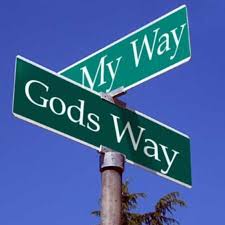
“Early in the morning Jacob took the stone that was near his head and set it up as a marker. He poured oil on top of it and named the place Bethel…Then Jacob made a vow: ‘If God will be with me and watch over me on this journey, if He provides me with food to eat and clothing to wear, and if I return safely to my father’s house, then the Lord will be my God. This stone that I have set up as a marker will be God’s house, and I will give to You a tenth of all that You give me'” (Genesis 28:18-22, HCSB).

Jacob was on a journey to Haran and at the end of one of the days during his journey he stopped and camped outdoors.

That night God appeared to Jacob in a dream of a stairway that started from where he was and reached to heaven. Angels were ascending and descending the stairway. In the dream God transferred to Jacob all the essential elements of the covenant He had established with his grandfather and father, Abraham and Isaac.

When Jacob awoke, he took the stone that was near his head and set it up as as a marker or a memorial and anointed it with oil and named the place, Bethel, meaning house of God. Then Jacob made the vow stated in these verses.

Continue reading

An Expensive Meal – Genesis 25:19-34

Originally published on January 22, 2014

“So Esau swore an oath, thereby selling all his rights as the firstborn to his brother, Jacob. Then Jacob gave Esau some bread and lentil stew. Esau ate the meal, then got up and left. He showed contempt for his rights as the firstborn” (Genesis 25:33-34, NLT).

Esau and Jacob were twin sons of Isaac. As they grew up, Esau, the firstborn of the twins, was an outdoorsman and preferred by his father, Isaac. Jacob was a homebody and preferred by his mother, Rebekah.

We see these personality traits on display in this story. Esau had been out in the woods, possibly hunting, while Jacob was at home cooking. When Esau came home exhausted and hungry, he asked Jacob for some stew. Jacob said he would trade Esau some stew for Esau’s rights as the firstborn son. Esau swore an oath selling his birthright to his brother for the price of a meal.

Continue reading

Mass Destruction – Genesis 18:1-19:27

Previously posted on January 14, 2013

“Then out of the sky the Lord rained on Sodom and Gomorrah burning sulfur from the Lord. He demolished these cities, the entire plain, all the inhabitants of the cities, and whatever grew on the ground. But Lot’s wife looked back and became a pillar of salt.” (Genesis 19:24-26, CSB).

One of the most provocative stories in Genesis is the mass destruction of Sodom and Gomorrah. Perhaps, it is the strange interplay between good fortune and bad fortune expressed in the events leading up to the destruction that makes the story so foreboding.

It’s the middle of an otherwise ordinary day in the arid land where Abraham resides when the heat is at its blistering peak. Abraham is resting at the entrance to his tent when he sees three travelers standing nearby. His nomadic sense of hospitality demands that he invites them to stop and refresh themselves before proceeding on their journey .

Continue reading

The Last Laugh – Genesis 17:17; 18:12; 21:2-3,5-6

(Originally posted January 20, 2014)

LastLaugh

“Then Abraham fell on his face and laughed, and said in his heart, ‘Will a child be born to a man one hundred years old? And will Sarah, who is ninety years old, bear a child?’ … Sarah laughed to herself, saying, ‘After I have become old, shall I have pleasure, my lord being old also?’ … So Sarah conceived and bore a son to Abraham in his old age, at the appointed time of which God had spoken to him. Abraham called the name of his son who was born to him, whom Sarah bore to him, Isaac….Now Abraham was one hundred years old when his son Isaac was born to him. Sarah said, ‘God has made laughter for me; everyone who hears will laugh with me.'” (Genesis 17:17; 18:12; 21:2-3,5-6, NASB).

The name Isaac means, “He laughs.” And, each time the verb “laugh” is used in these verses, it is a wordplay on the name “Isaac.” So, this extraordinary and somewhat humorous story of the miraculous birth of Isaac is actually a story of who gets the last laugh!

God appeared to Abraham when he was ninety-nine years old and renewed His covenant with him. God commanded Abraham and all his male descendants to be circumcised as a sign of His covenant.

Then, God told Abraham that his covenant people will be descended through a son born to his wife, Sarah, who was ninety years old and barren.  Abraham fell on his face before God and laughed at the implausibility of a child being born to a hundred-year-old man and a ninety-year-old woman.

Continue reading

It’s Providential – Genesis 30

Simply stated, providence is God’s intervention in His creation. The theological concept of providence incorporates the foreseeing care and guidance of God. In fact, the Latin root of the English word has the sense of  knowledge of the future.

So, because God knows the future, He controls the present.

Providence is probably the main point in which a biblical worldview comes into conflict with contemporary worldviews. Certainly, the Old Testament worldview was more respective of God’s providence than is the modern, scientific view that asks “Why” and “How” about every occurrence in life and nature.

The Old Testament writers seem to have a rich understanding of God’s providence. To the Old Testament writer, it’s all providential!

The two major events from the life of Jacob described in Genesis 30 illustrate the Old Testament perspective of providence.

Continue reading

An Offer You Can’t Refuse – Genesis 17:1-2

offeryoucantrefuse“When Abram was 99 years old, the Lord appeared to him, saying, I am God Almighty. Live in My presence and be blameless. I will establish My covenant between Me and you, and I will multiply you greatly” (Genesis 17:1-2, ESV).

Thirteen years after Ishmael’s birth, God again appeared to Abram, whom He renamed as Abraham during this appearance. In these verses God calls Himself “El Shaddai,” for which the meaning is unknown, but its translation as “God Almighty” is based on a tradition going back more than two thousand years.

Continue reading