
Divine Symmetry – Romans 8:26-28

divine_symmetry“And the Holy Spirit helps us in our weakness. For example, we don’t know what God wants us to pray for. But the Holy Spirit prays for us with groanings that cannot be expressed in words. And the Father who knows all hearts knows what the Spirit is saying, for the Spirit pleads for us believers in harmony with God’s own will. And we know that God causes everything to work together for the good of those who love God and are called according to his purpose for them” (Romans 8:26-28, NLT).

We often try to comfort someone who is suffering or grieving by quoting a phrase in vs. 28: “all things work together for good.” In the middle of tragic circumstances these words may provide little consolation to the one who is hurting. And the sentiment may even seem to trivialize one’s loss or grief (It’s almost like saying be happy because this bad thing happened to you.)

Continue reading

The Walking Dead – Romans 8:11

walking-dead“The Spirit of God, who raised Jesus from the dead, lives in you. And just as God raised Christ Jesus from the dead, he will give life to your mortal bodies by this same Spirit living within you” (Romans 8:11, NLT).

The Apostle Paul describes Christians as people presently living in bodies that will die and be resurrected and then live forever.

Continue reading

God Did! – Romans 8

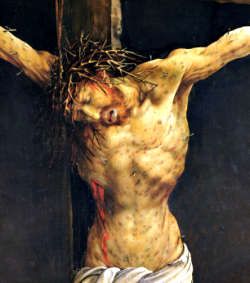
Christ_Crucified“What the law could not do since it was limited by the flesh, God did.” (Romans 8:3, HCSB).

Some consider Romans 8 the greatest, most theologically eloquent chapter about Christian spirituality in the New Testament. Certainly, some verses from Romans 8 are the most often quoted, often taught, and often preached of any in the Bible. Here’s a few examples:

Bent – Ecclesiastes 7:13

Bent-Nail“Consider the work of God. For who is able to straighten what He has bent!” (Ecclesiastes, 7:13, NASB).

If your carpentry skills leave much to be desired, like mine, then you have had the experience of not hitting a nail squarely on the head and it sets and bends. And  then it is difficult, if not impossible, to straighten the nail out and hammer it in. Yet, I still spend a lot of time and effort trying to straighten out that nail so I can hammer it in.

Continue reading

Shine On! – Isaiah 60:1-2

cityonahill“Arise, Jerusalem! Let your light shine for all to see. For the glory of the Lord rises to shine on you. Darkness as black as night covers all the nations of the earth, but the glory of the Lord rises and appears over you. All nations will come to your light; mighty kings will come to see your radiance” (Isaiah 60:1-2, NLT).

When Jesus told His disciples in the Sermon on the Mount to be the light of the world and compared them to a city on a hilltop that cannot be hidden (Matthew 5:14), He may have been alluding to Isaiah’s description of the future glory of Jerusalem in these verses.

Continue reading

Making Lemonade – Romans 5:1-5

lemonade

“Therefore, since we have been declared righteous by faith, we have peace with God through our Lord Jesus Christ. We have also obtained access through Him by faith into this grace in which we stand, and we rejoice in the hope of the glory of God. And not only that, but we also rejoice in our afflictions, because we know that affliction produces endurance, endurance produces proven character, and proven character produces hope. This hope will not disappoint us, because God’s love has been poured out in our hearts through the Holy Spirit who was given to us” (Romans 5:1-5, HCSB).

Commentators differ as to whether Romans 5 belongs thematically with Chapters 3 and 4 where the Apostle Paul argues for the imputation of righteousness through Christ or with Chapters 6-8 where Paul describes the new life in Christ.

I see it as transitional from one theme to the next because it summarizes Paul’s case for righteousness in Christ and then suggest how this new life of righteousness in Christ can be applied to our personal lives.

Continue reading

What’s In a Name? – Isaiah 56:5-6

rose“I will give them, in My house and within My walls, a memorial and a name better than sons and daughters. I will give each of them an everlasting name that will never be cut off. And the foreigners who join themselves to the Lord minister to Him, love the name of ‘Yahweh’ and become His servants” (Isaiah 56:5-6, HCSB).

The Shakespearian character, Juliet asked Romeo: “What’s in a name? That which we call a rose by any other name would smell as sweet.” Juliet’s question means that what really matters is not what someone is called but what someone is.

Continue reading