

Being Christian or Being Religious – John 5:1-30

“’Get up,’ Jesus told him, ‘pick up your mat and walk.’ Instantly the man got well, picked up his mat, and started to walk. Now that day was the Sabbath, and so the Jews said to the man who had been healed, ‘This is the Sabbath. The law prohibits you from picking up your mat’” (John 5:8-10, CSB).

In the story of Jesus healing the disabled man at the Pool of Bethesda on the Sabbath, consider the absurdity of what the Jewish leaders are contending. They argued that because the man picked up his mat and walked away with it on the Sabbath after being healed by Jesus, he broke Sabbath law.

Whaaat? The man had been disabled for 38 years!

Because of their religious convictions, they concluded that Jesus shouldn’t be healing people on the Sabbath because it caused them and Jesus to break Sabbath law.

This certainly begs the question: “Does God take a break from redeeming people?”

Continue reading

Location, Location, Location – John 4:1-26

Jesus told her, ‘Believe me, woman, an hour is coming when you will worship the Father neither on this mountain nor in Jerusalem…. But an hour is coming, and is now here, when the true worshipers will worship the Father in Spirit and in truth. Yes, the Father wants such people to worship him. God is spirit, and those who worship him must worship in Spirit and in truth'” (John 4:21-24, CSB).

Mount Gerizim was the Old Testament location where God was to pronounce blessing on the Jewish people upon entering the promised land: “When the Lord your God brings you into the land you are entering to possess, you are to proclaim the blessing at Mount Gerizim and the curse at Mount Ebal…. When you possess it and settle in it, be careful to follow all the statutes and ordinances I set before you today” (Deuteronomy 11:29, CSB). This ceremony was solemnly performed after the Israelites began to take possession of the promised land (see Joshua 8:30-35).

During Jesus’ time Samaritanism was alienated from Judaism. This alienation had evolved over many centuries starting with the division of Israel into northern and southern kingdoms and the bad influence of evil kings in the northern kingdom. The conquest of Israel (northern kingdom) by Assyria and the resulting importation of foreign colonists greatly modified the Jewish religion in that region.

Continue reading

The What and Why of Salvation – John 3

“The one who believes in the Son has eternal life, but the one who rejects the Son will not see life; instead, the wrath of God remains on him” (John 3:36, CSB).

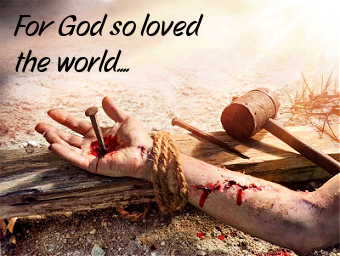
John 3 contains two Messiah-affirming stories of Jesus: (1) the secret meeting between Nicodemus the Pharisee and Jesus from which originates those iconic and rudimentary Christian propositions: “You must be born again” and John 3:16: “For God so loved the world….” and, (2) the defection of some of John the Baptist’s disciples to Jesus’ ministry, which John the Baptist acknowledges with a seeming air of expectancy, “He must increase but I must decrease” (vs. 30).

Then, the final six verses of Chapter 3 provide a theological recap of the case John is making through these two stories for the Messiahship of Jesus.

John declares that there is some metaphysical angst that accompanies unbelief in Christ’s divinity–the potential for eliciting the wrath of God. We often express this tension in the gospel message in terms like this: “If you believe in Jesus you go to heaven when you die, but if you don’t believe in Him you go to hell when you die.”

Continue reading